Flawless Linen: The 5-Minute Steaming Routine
Advertisements

The 5-Minute Steaming Routine That Keeps Linen Separates Looking Polished is a practical way to remove many everyday wrinkles before wearing linen shirts, trousers, skirts, jackets, and other separates. It should be viewed as a quick garment-care technique rather than a guarantee that linen will remain perfectly crease-free throughout the entire day.
For classic fashion enthusiasts, steaming can be especially useful because linen naturally develops creases during wear, even when it begins the day carefully pressed or steamed.
The safest routine combines the garment's care label, the steamer manufacturer's instructions, proper hanging, controlled steam, and enough drying time before dressing.
Why Linen Wrinkles So Easily
Linen is valued for its breathable feel, distinctive texture, and ability to work particularly well in warm-weather wardrobes, but it also develops visible creases relatively easily.
That tendency is not necessarily a defect. The relaxed surface and natural wrinkling of linen are often considered part of the fabric's character, especially in casual and softly tailored clothing.
Steaming can relax many wrinkles before wear, but movement at the elbows, waist, hips, and knees will normally create new creases as the day progresses.
What Steam Actually Does
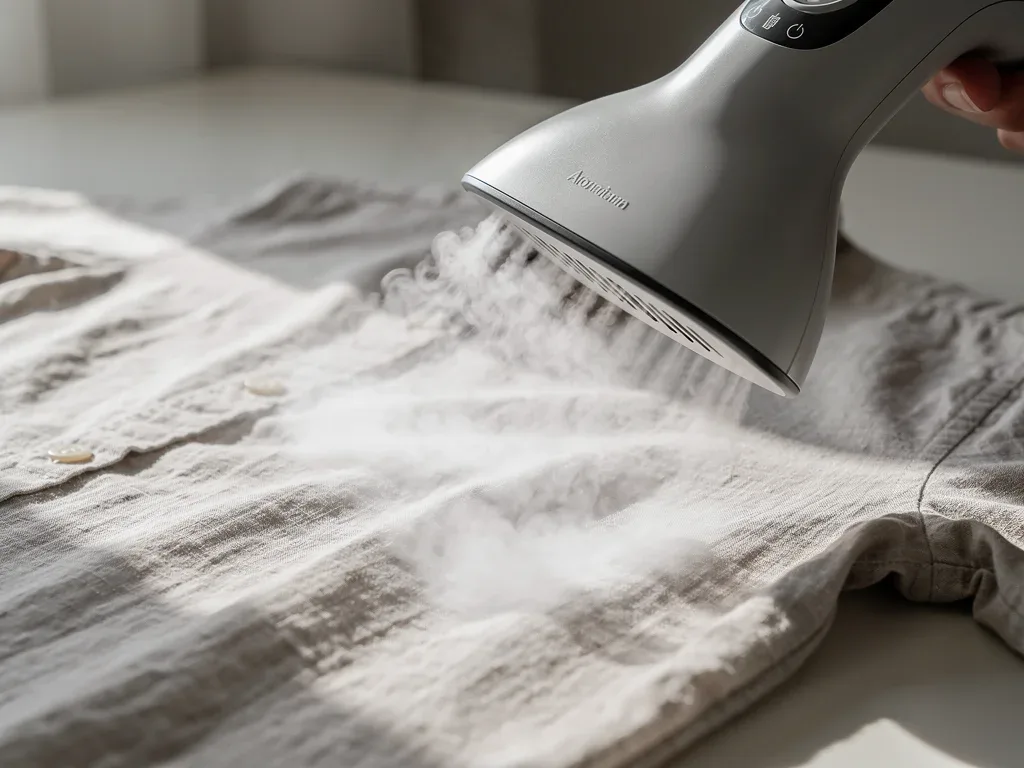
Hot moisture helps relax textile fibers so wrinkles can release more easily while the garment hangs vertically.
A garment steamer therefore works differently from a traditional iron, which combines heat with direct pressure against the fabric.
Neither method is universally superior for every linen garment, so the appropriate choice depends on the finish desired, the garment construction, and the manufacturer's care instructions.
Mastering the Fundamentals of Linen Steaming
A quick steaming routine works best when the garment only needs wrinkle removal rather than washing, stain treatment, or restoration.
Before beginning, inspect the care label and make sure the garment is suitable for steaming, particularly when linen is blended with other fibers or contains delicate trims, coatings, or structured details.
The objective is to use enough steam to relax creases without unnecessarily saturating the garment.
Choosing the Right Steamer for Efficiency
A handheld garment steamer can be convenient for everyday touch-ups because it occupies little space and many current models heat relatively quickly.
Larger upright steamers may offer bigger water tanks and longer continuous steaming sessions, which can be useful when preparing several garments at once.
Instead of choosing by wattage alone, compare heat-up time, steam output, tank capacity, weight, manufacturer instructions, and features relevant to the fabrics you actually wear.
Handheld steamer: Practical for short touch-ups and smaller wardrobes.
Travel steamer: Compact, but performance and tank capacity vary by model.
Upright steamer: Better suited to longer sessions or multiple garments.
Check the Water Instructions Before Filling the Tank
The original advice to always use distilled water is too broad because manufacturers do not all specify the same type of water.
Some Rowenta garment steamers are designed for untreated tap water and recommend a mixture of tap and distilled water when local water is very hard, while some Conair models recommend distilled water to reduce mineral buildup.
Follow the manual for your exact steamer rather than assuming that bottled, filtered, distilled, softened, or tap water is appropriate for every appliance.
Preparing Linen for Better Results
Place the garment on a sturdy hanger in an open area where steam can move safely around the fabric.
Check for visible stains before applying heat and moisture because steaming is intended primarily for refreshing and wrinkle removal, not for cleaning stained fabric.
Empty pockets and straighten collars, cuffs, waistbands, and other areas that can fold over themselves while hanging.
Give the Garment Room to Hang Naturally
A crowded closet or narrow working area makes it harder to reach the garment evenly and can immediately introduce new creases.
Let trousers hang from an appropriate hanger and allow shirts, blouses, or jackets to fall naturally before beginning.
If the garment is badly crushed from storage, the five-minute approach may not be enough and a longer steaming or ironing session may produce better results.
The 5-Minute Linen Steaming Routine
Five minutes is best treated as a practical target for a relatively simple garment rather than a fixed performance guarantee.
Actual steaming time depends on the steamer, garment size, linen weight, construction, and how deeply the wrinkles are set.
A lightly creased linen shirt may take only a few minutes, while heavy trousers or structured pieces can require more work.
Minute 1: Fill, Heat, and Inspect
Fill the appliance with the type of water specified in its manual and switch it on according to the manufacturer's directions.
Allow the steamer to reach its ready state instead of beginning before steam output becomes stable.
During heat-up, check the garment label, inspect problem areas, and position the piece so you can reach it safely.
Minutes 2–3: Start with the Largest Areas
Begin with broad sections such as the back and front of a shirt, the main panels of a skirt, or the legs of linen trousers.
Move the steamer steadily from top to bottom while keeping the garment supported and using light tension only when it can be done safely.
Avoid repeatedly soaking one area; several controlled passes are preferable to concentrating excessive moisture in one place.
Minute 4: Focus on Wrinkle-Prone Details
Move to collars, plackets, hems, pockets, waistbands, and other areas where fabric layers or construction details can hold creases.
These sections may require slower passes because thicker layers can take longer to respond than a single sheet of linen.
If a wrinkle remains deeply set, an iron used according to the care label may be more effective than continuing to saturate the same area with steam.
Minute 5: Final Pass and Drying Check
Step back and inspect the garment under good light, correcting only the remaining areas that visibly need attention.
After the final pass, leave the piece hanging until it is no longer warm or noticeably damp before putting it on.
The garment may look considerably smoother at this stage, but normal body movement can still create new linen creases later in the day.
Safe Steaming Technique Matters
Steam can cause burns, so garment care should be approached as a heat-safety task rather than merely a styling routine.
Manufacturers commonly instruct users to work with garments on hangers and warn against steaming clothing while someone is wearing it.
Hands should remain away from the steam path, particularly when holding fabric under tension or working around cuffs and hems.
Do Not Steam Clothing While Wearing It
Never aim hot steam at a garment that is currently on your body or another person's body.
Steam penetrates fabric and can reach skin rapidly, even when the garment itself does not initially feel dangerously hot.
Use a hanger, approved steaming board, heat-resistant accessory, or other setup specified by your appliance manufacturer.
How Close Should the Steamer Be?
There is no universal distance that applies to every garment steamer because different models are designed to operate differently.
Some steam heads are designed for contact with certain fabrics, while others are intended to operate slightly away from the textile.
For this reason, follow the operating instructions for the exact steamer instead of relying on a generic rule such as always holding it several inches away.
Be Especially Careful with Blends and Decorative Details
A garment described casually as linen may actually contain linen blended with viscose, cotton, polyester, elastane, or another fiber.
Embroidery, adhesives, interfacing, decorative coatings, buttons, and trims can also respond differently to heat and moisture than the main fabric.
If the label or manufacturer warns against steam, that instruction should override a general linen-care routine.
Post-Steaming Care for Better Wrinkle Control
Putting on linen immediately while it is warm or damp can encourage new creases where the garment bends against the body.
Allowing it to hang briefly after steaming gives excess moisture time to dissipate before dressing.
This short waiting period improves the starting appearance but cannot make natural linen permanently wrinkle-resistant.
Allow Linen to Dry Before Dressing
Drying time depends on how much steam was applied, room ventilation, fabric weight, and ambient humidity.
If the fabric still feels damp, give it additional time rather than relying on an arbitrary fixed number of minutes.
Once dry, handle the garment carefully and avoid crushing it under other clothing before wearing.
Storing Linen to Reduce Deep Creasing
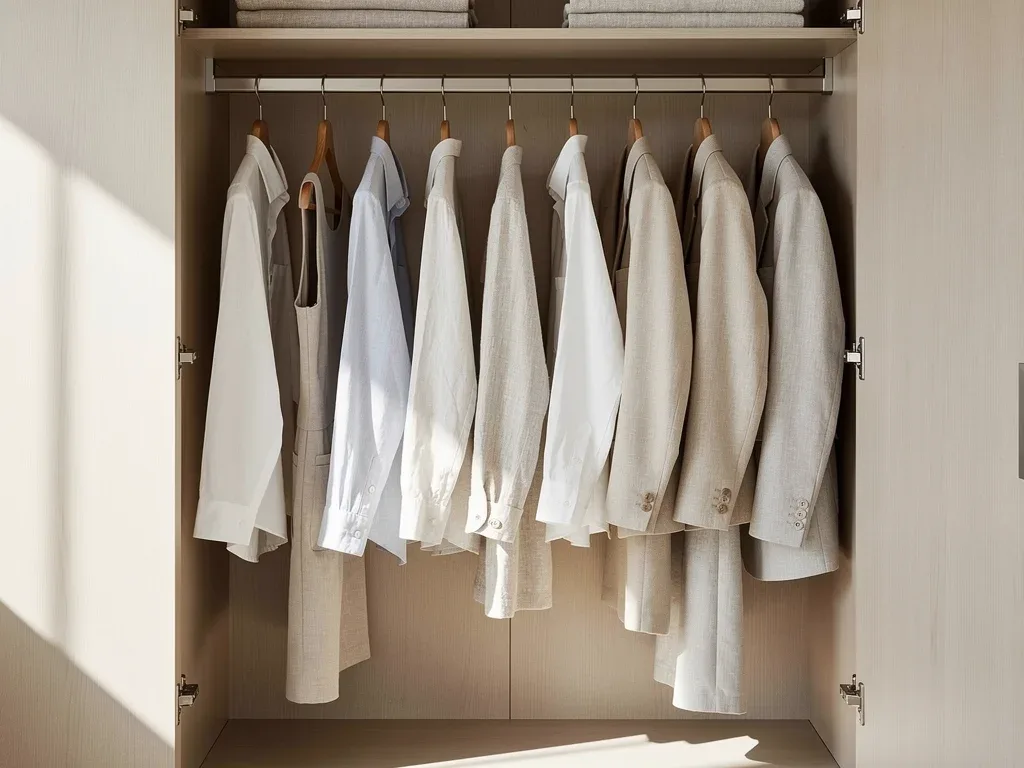
Storage does not prevent every wrinkle, but giving garments enough room can help avoid the severe compression creases created by tightly packed closets.
Shirts, dresses, jackets, and similar pieces can be hung when their construction allows, while trousers may be hung or folded according to the garment's shape and available storage.
Good storage supports the broader approach described in Maximize Your Classic Wardrobe by reducing unnecessary handling between wears.
Use Storage Appropriate to the Garment
Structured linen jackets may benefit from supportive hangers that preserve the shoulder line, while lightweight shirts generally need less substantial support.
If linen trousers are folded, avoid placing heavy garments on top of them for long periods when you want to minimize deep compression marks.
Long-term storage should prioritize a clean, completely dry garment and a location protected from persistent dampness and excessive compression.
Handling Stubborn Linen Wrinkles
Deep-set folds may not disappear during a brief handheld steaming session, especially in heavier linen fabrics.
Additional steam can help, but continually applying moisture is not always the most efficient response.
An iron or steam iron may provide more controlled pressure when the care label allows it and a sharper finish is desired.
When an Iron May Work Better
An iron is particularly useful when you want crisp trouser creases, sharply defined collars, flat plackets, or a more formal pressed appearance.
Linen can tolerate relatively high ironing temperatures in many cases, but the garment care label and the iron manufacturer's fabric settings should determine the actual setting.
For blends or decorated garments, never assume that a temperature appropriate for pure linen is appropriate for every component of the piece.
Preventing Water Spots and Steamer Spitting
Droplets from a steamer can result from condensation, incorrect operation, mineral deposits, incompatible water, or maintenance issues.
Different manufacturers provide different instructions for preventing mineral buildup, which is another reason not to use one universal water recommendation.
Cleaning and descaling should be performed only according to the manual because adding an unapproved chemical or home remedy to the tank can damage some appliances.
If the Steamer Starts Spitting Water
Check whether the appliance has reached operating temperature and whether the tank and accessories are installed correctly.
Review the manufacturer's instructions regarding water type and cleaning if spitting persists.
Allow any accidental wet area on the garment to dry before wearing it, and avoid rubbing aggressively while the linen is damp.
Steaming Versus Ironing Linen
Steaming and ironing perform overlapping but different jobs, so it is misleading to claim that steaming is always better or automatically safer for linen.
Steaming is convenient for relaxing wrinkles while a garment hangs and can preserve a softer, more relaxed texture.
Ironing provides direct pressure and may be more effective when a crisp, structured finish is the objective.
Choose According to the Desired Finish
For a softly tailored linen shirt or relaxed summer separates, steaming may deliver exactly the appearance you want.
For sharply pressed trousers, formal collars, table linens, or particularly persistent wrinkles, ironing may provide greater control.
Many wardrobes can benefit from both tools instead of treating one method as a universal replacement for the other.
Can Steaming Keep Linen Smooth All Day?
No garment-care technique can reliably guarantee that natural linen will remain completely wrinkle-free through an entire day of sitting, walking, driving, and bending.
Areas exposed to repeated movement such as elbows, waistlines, lap zones, and knees will commonly develop creasing during wear.
The realistic purpose of a quick steaming routine is to begin the day with a smoother garment and reduce storage wrinkles, not eliminate linen's natural behavior.
Embrace Some Natural Texture
A perfectly pressed appearance is only one way to wear linen, and many classic outfits intentionally retain a small amount of natural texture.
Trying to eliminate every crease throughout the day can turn a low-maintenance summer fabric into an unnecessarily demanding garment.
A better goal is usually a clean, intentional, and well-maintained appearance rather than permanent visual perfection.
Integrating Steaming into a Classic Wardrobe
For people who wear linen frequently, leaving an appropriate steamer accessible can make short touch-ups easier before work, travel, dinner, or other events.
Preparation becomes faster when garments are stored properly and do not begin each morning heavily crushed.
This makes steaming a useful addition to classic capsule wardrobe maintenance without turning it into a mandatory daily ritual.
A Morning Routine Should Remain Flexible
A lightly wrinkled shirt may require only two or three minutes, while another piece may require substantially longer.
There is no benefit in continuing to steam a garment simply to satisfy a five-minute target after its visible wrinkles have already relaxed.
Likewise, a heavily wrinkled piece may need more than five minutes or a different finishing method altogether.
Seasonal and Long-Term Linen Care
At the end of a season, linen should generally be stored clean and completely dry rather than merely steamed to mask odors or visible creases.
Follow the garment label for washing, professional cleaning, drying, and ironing because construction and blends can change the appropriate care method.
Before returning a stored garment to regular rotation, inspect it for stains, moisture problems, damage, or deep wrinkles that require attention.
Avoid Treating Steam as a Cleaning Method
A garment steamer can freshen appearance and reduce wrinkles, but it does not replace proper laundering or professional cleaning when the garment is dirty.
Body oils, sunscreen, food, makeup, and other residues still need appropriate cleaning according to the care label.
This distinction is particularly important before long-term storage because untreated stains can become more difficult to remove over time.
Does Steaming Reduce Dry-Cleaning Needs?
Steaming may allow a clean garment to be reworn when its primary issue is wrinkling rather than soil, but it should not be described as a substitute for every dry-cleaning cycle.
Whether a linen garment requires professional cleaning depends on its care label, construction, lining, trims, stains, and how it has been worn.
A pure linen shirt labeled for washing has very different maintenance requirements from a tailored linen-blend jacket labeled dry-clean only.
Potential Cost Savings Depend on the Wardrobe
A person who previously sent clean but wrinkled garments to a professional cleaner only for pressing may save money by performing suitable touch-ups at home.
Someone whose garments require professional stain treatment or specialist cleaning may see little reduction in cleaning expenses.
For that reason, annual savings cannot be responsibly estimated without knowing the wardrobe, local service prices, and previous cleaning habits.
Are There Environmental Benefits to Steaming?
The environmental comparison between steaming, ironing, washing, and professional cleaning depends on electricity consumption, water use, frequency, equipment efficiency, and the cleaning process being replaced.
It is therefore too broad to claim that a short steaming routine is automatically more sustainable than every alternative.
The strongest sustainability principle is generally to care for garments appropriately, avoid unnecessary cleaning, repair when practical, and keep usable clothing in service for longer.
Garment Longevity Depends on More Than Steam
The original claim that steaming necessarily extends linen's lifespan compared with ironing is not sufficiently universal to present as fact.
Garment longevity also depends on laundering frequency, detergent, drying method, abrasion, storage, construction quality, stains, and how aggressively heat is applied.
Using either steaming or ironing correctly and according to the care label is more defensible than declaring one method universally safer.
Common Linen Steaming Mistakes
The most common problems usually come from treating every garment and every steamer as though they require identical settings and techniques.
Ignoring the manual, adding unapproved substances to the water tank, steaming while wearing the garment, and over-wetting a small area can all create unnecessary problems.
A simple routine becomes more reliable when appliance instructions and garment-care information are treated as the primary references.
Five Mistakes to Avoid
Do not assume distilled water is correct for every appliance, do not steam clothing while it is being worn, and do not keep concentrating steam on one spot indefinitely.
Avoid perfume, essential oils, starch, vinegar, or other additives in the water tank unless the manufacturer specifically approves them.
Finally, do not expect steaming to remove stains, replace laundering, or stop natural linen from creasing during wear.
Ignoring the garment care label.
Using the wrong water for the steamer model.
Steaming a garment while someone is wearing it.
Over-saturating one area.
Treating steam as a substitute for cleaning.
Building a Better Classic-Fashion Care Routine
Quick steaming works best as one component of a broader garment-care system that includes correct washing, drying, storage, stain treatment, and occasional repair.
That approach supports the same long-term wardrobe philosophy explored in restoring classic garments and choosing durable, versatile pieces.
Maintaining clothing consistently can be more useful than repeatedly trying to rescue garments only after severe creasing, stains, or storage damage develop.
Match the Routine to the Fabric
Even within a classic fabric wardrobe, linen, wool, cotton, silk, and synthetic blends have different care requirements.
A steamer that works beautifully on one garment may not be appropriate for a heavily structured, embellished, coated, or particularly delicate piece.
The care label and equipment manual remain more authoritative than a generalized fashion-care rule.
What to Look for in a Linen-Friendly Steamer
A practical steamer should produce stable steam, be comfortable to hold, and have enough tank capacity for the number of garments you normally prepare.
Fast heat-up can help with short morning sessions, but heat-up claims vary considerably by model and should be taken from manufacturer specifications rather than assumed.
Safety features such as automatic shutoff can also be useful, particularly for an appliance intended for frequent household use.
Do Not Buy Based on Wattage Alone
Electrical wattage does not by itself describe real-world wrinkle-removal performance.
Steam rate, head design, temperature control, attachments, tank capacity, and ergonomics all influence how efficiently the appliance can be used.
For people building a classic fashion wardrobe, ease of use may matter more than choosing the model with the largest number printed on the box.
The Realistic 5-Minute Routine
The strongest version of this routine is simple: prepare a suitable garment, heat the steamer correctly, work from broad sections toward details, and allow the fabric to dry before dressing.
Five minutes can be enough for a lightly wrinkled linen separate, but the routine should expand or shorten according to the garment rather than forcing every piece into the same timeframe.
Most importantly, the technique can create a polished starting point while respecting the fact that natural linen will normally develop some texture again during wear.
Key Point | Practical Guidance |
|---|---|
Water Choice | Follow the exact steamer manufacturer's instructions; distilled water is not universally required. |
Steaming Technique | Work systematically while the garment hangs and avoid unnecessary over-saturation. |
Safety | Never steam a garment while it is being worn and keep skin away from hot steam. |
After Steaming | Allow the garment to dry before wearing or placing it back in storage. |
Expected Result | Steaming can reduce wrinkles before wear but cannot guarantee crease-free linen all day. |
Frequently Asked Questions About Linen Steaming
Can a five-minute steaming routine really smooth linen?
It can be enough for lightly wrinkled linen separates, but heavier fabrics, larger garments, and deep creases can require additional time or ironing.
Should I always use distilled water in a garment steamer?
No. Water recommendations vary by manufacturer and model. Some steamers use normal tap water, some recommend mixing distilled water when water is hard, and others recommend distilled water, so check the appliance manual.
How close should I hold the steamer to linen?
Follow the instructions for your specific steamer because some models and attachments are designed for fabric contact while others use a different technique.
Is steaming always better than ironing linen?
No. Steaming is convenient for relaxing wrinkles and preserving a softer look, while ironing can be more effective when a crisp, sharply pressed finish is desired.
Will steaming keep linen wrinkle-free all day?
No. Linen naturally creases during movement and wear. Steaming can provide a smoother starting appearance, but it cannot prevent all later wrinkles.
Can steaming replace washing or dry cleaning?
No. Steam can refresh and de-wrinkle suitable garments, but stains, body oils, and accumulated soil still require the cleaning method specified by the garment's care label.
Perspectives
The appeal of The 5-Minute Steaming Routine is not that it transforms linen into a permanently wrinkle-free fabric, but that it provides a fast way to prepare suitable pieces for everyday wear.
For readers interested in sustainable classic fashion, the more defensible long-term strategy is to care for clothing according to its actual materials and construction rather than relying on exaggerated promises about a single maintenance technique.
As 2026 classic fashion trends continue to favor natural textures and relaxed tailoring, linen's characteristic creasing can be treated as part of the fabric's appearance while steaming remains a useful tool for keeping that texture intentional and polished.