AI in Beauty: The Major Shift in Product Development by 2026
Advertisements
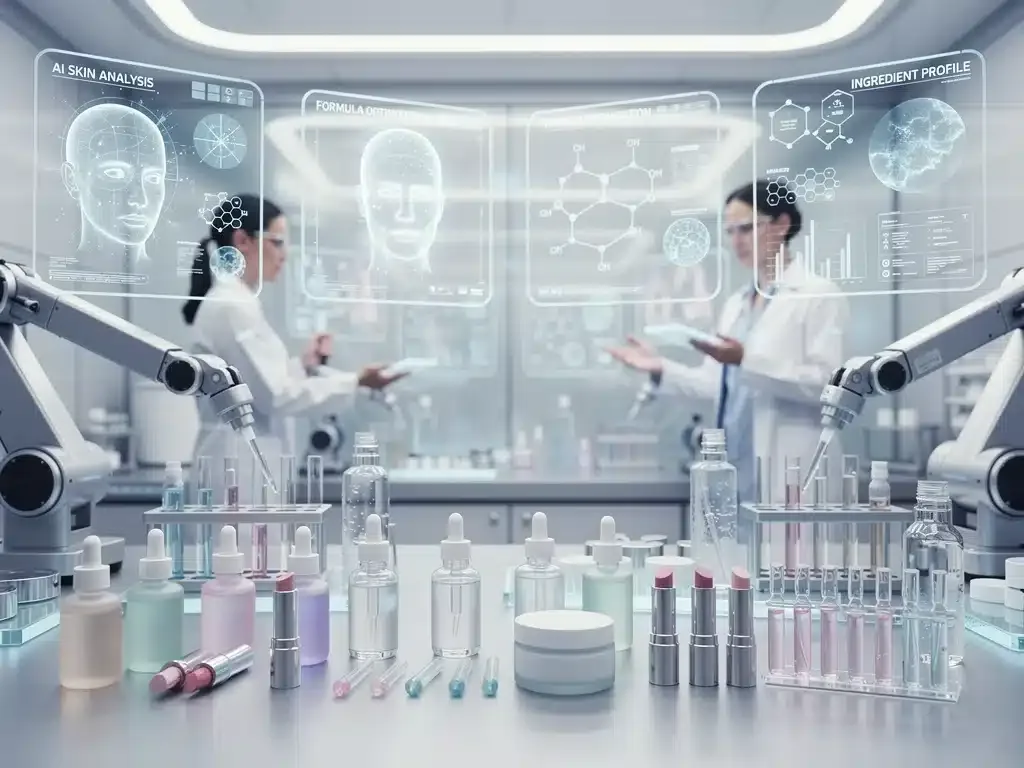
By the end of 2026, the beauty industry will experience a major shift in product development driven by AI, moving from traditional R&D to an era of hyper-personalized, data-driven formulations created with unprecedented speed and precision.
The beauty industry, long rooted in tradition and subjective consumer preferences, is on the cusp of a monumental transformation. The impact of AI on beauty product development is not merely an incremental change; it represents a seismic shift that will redefine how products are conceived, formulated, and marketed. By the end of 2026, we anticipate one major shift: the pervasive adoption of AI-driven hyper-personalization, moving beyond simple recommendations to actual bespoke product creation at scale.
The Dawn of AI in Beauty R&D
The integration of Artificial Intelligence into research and development within the beauty sector marks a new era. Historically, product development has been a lengthy, resource-intensive process, heavily reliant on trial-and-error, market trends, and often, anecdotal evidence. AI, however, introduces an unprecedented level of data analysis, predictive modeling, and automation, promising to revolutionize every facet of this pipeline.
AI’s initial foray into beauty was largely confined to consumer-facing applications, such as virtual try-on tools and diagnostic apps. While these tools offered convenience, their influence on the core product development cycle was limited. The real game-changer lies in AI’s ability to process vast datasets related to ingredients, skin biology, environmental factors, and consumer feedback, uncovering insights that human researchers might miss. This analytical power accelerates discovery and optimizes formulation, leading to more effective and targeted products.
Accelerating Ingredient Discovery
One of the most significant contributions of AI is its capacity to rapidly identify and screen novel ingredients. Traditional methods for discovering new compounds are often time-consuming and expensive. AI algorithms can analyze molecular structures, predict their efficacy, and even simulate their interactions with skin or hair, drastically reducing the time and cost associated with early-stage research.
- AI sifts through millions of compounds for desired properties.
- Predictive modeling shortens lead times for new ingredient identification.
- Virtual screening reduces the need for extensive physical testing.
- Optimizes ingredient combinations for synergistic effects.
This acceleration in ingredient discovery not only brings innovative solutions to market faster but also allows brands to explore more sustainable and ethically sourced alternatives, aligning with growing consumer demand for responsible beauty. The ability to quickly assess the potential of natural extracts or lab-grown alternatives empowers formulators to push boundaries while minimizing environmental impact.
Hyper-Personalization: The Major Shift by 2026
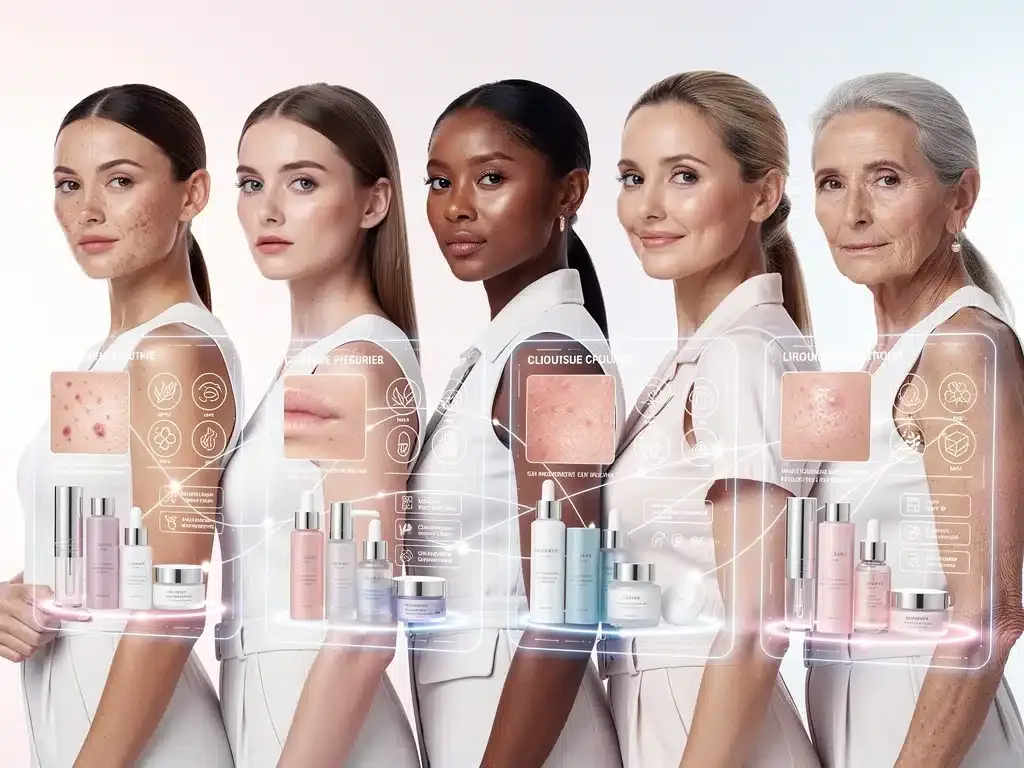
The most profound and transformative impact of AI on beauty product development by the end of 2026 will be the widespread adoption of hyper-personalization, moving beyond mere product recommendations to the creation of truly bespoke formulations on a mass scale. This isn’t just about choosing a shade; it’s about tailoring every aspect of a product to an individual’s unique biological and environmental profile.
Current personalization efforts often rely on questionnaires or basic skin analysis. While useful, these methods offer a limited scope. AI, coupled with advances in genomics, microbiome research, and environmental data, can create a comprehensive profile for each consumer. This includes analyzing genetic predispositions, real-time skin conditions, local climate data, lifestyle factors, and even dietary habits. The result is a product that is not just suitable, but optimally designed for that specific individual.
From Generic to Genomic Formulations
Imagine a future where your skincare serum is formulated based on your DNA to address specific genetic markers related to aging, sensitivity, or collagen production. This level of precision is becoming a reality. AI can interpret complex genomic data, identifying specific needs and matching them with a vast library of ingredients known to target those concerns. This moves beauty from a one-size-fits-all approach to a truly individualized regimen.
- DNA analysis informs ingredient selection for genetic predispositions.
- Microbiome mapping guides formulations for optimal skin health.
- Real-time environmental data (pollution, UV index) adjusts product needs.
- Lifestyle factors (stress, diet) integrated into personalized algorithms.
This granular understanding allows for the development of adaptive formulations that can even change over time in response to shifts in an individual’s health, environment, or aging process. AI makes this complex data synthesis and formulation possible, ensuring that products remain effective and relevant throughout the consumer’s journey.
Ethical Considerations and Data Privacy in AI Beauty
As AI delves deeper into personal data for hyper-personalization, ethical considerations and data privacy become paramount. The collection and analysis of sensitive information, such as genetic data or lifestyle habits, raise significant questions about consent, security, and potential misuse. Consumers must trust that their data is handled responsibly and transparently.
Beauty brands leveraging AI for personalization will need robust ethical frameworks and stringent data protection policies. This includes clear communication about what data is collected, how it’s used, and who has access to it. Building this trust will be crucial for the widespread adoption of AI-driven personalized beauty. Regulatory bodies will also play a vital role in establishing guidelines and enforcing compliance.
Ensuring Responsible AI Development
The development of AI in beauty must prioritize fairness, accountability, and transparency. Algorithms must be free from biases that could lead to discriminatory outcomes, especially concerning diverse skin tones and hair types. Companies must invest in diverse data sets and ethical AI training to ensure their systems serve all consumers equitably.
- Strict data encryption and anonymization protocols.
- Transparent data usage policies and clear consumer consent.
- Regular audits of AI algorithms for bias detection.
- Compliance with global data protection regulations (e.g., GDPR, CCPA).
Furthermore, the industry needs to educate consumers about the benefits and risks of sharing their data for personalized products. This transparency fosters a more informed consumer base, enabling them to make conscious choices about their participation in the AI-powered beauty ecosystem.
Streamlining the Supply Chain and Manufacturing
Beyond product formulation, AI is poised to dramatically streamline the beauty supply chain and manufacturing processes. The ability to predict demand with greater accuracy, optimize inventory, and even automate production lines will lead to significant efficiencies and cost savings. This is particularly crucial for hyper-personalized products, which inherently require more flexible and agile manufacturing.
AI-driven demand forecasting can minimize waste from overproduction and ensure that personalized items are manufactured only when needed. This lean approach not only reduces environmental impact but also allows for smaller batch production, making bespoke beauty economically viable. Robotics and automation, guided by AI, will handle the intricate process of customized mixing and packaging.
Optimizing Production for Custom Formulations
The shift towards hyper-personalization necessitates a complete rethinking of traditional mass manufacturing. AI-powered smart factories will be capable of producing unique formulations on demand, adapting to individual customer specifications without significant retooling. This agility is key to scaling personalized beauty effectively.
- AI-driven demand forecasting minimizes waste and optimizes inventory.
- Robotic automation enables flexible, small-batch production.
- Predictive maintenance for manufacturing equipment reduces downtime.
- Optimized logistics for faster delivery of personalized products.
This integration of AI into manufacturing and supply chain management supports the broader trend of sustainability within the beauty industry. By reducing waste, optimizing resource allocation, and increasing efficiency, AI helps brands meet their environmental goals while also delivering highly customized products to consumers.
Sustainability and Environmental Impact
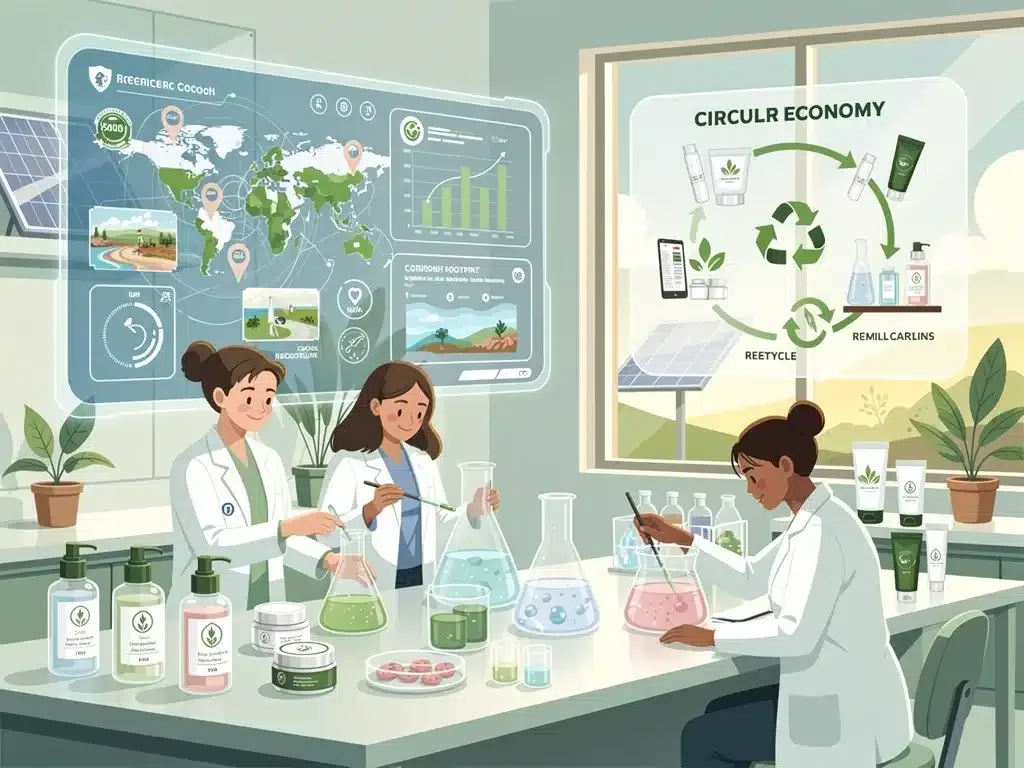
The role of AI in fostering a more sustainable beauty industry is undeniable. By enabling precise formulation, optimizing supply chains, and predicting consumer behavior, AI significantly reduces waste and promotes eco-friendly practices. This aligns perfectly with the growing consumer demand for products that are not only effective but also environmentally responsible.
AI can analyze the environmental footprint of ingredients, from sourcing to disposal, allowing brands to choose more sustainable alternatives. It can also optimize packaging design to minimize material use and facilitate recycling. The ability to create ‘on-demand’ personalized products further reduces waste associated with unsold inventory and expired goods, making the entire product lifecycle more sustainable.
Eco-Conscious Formulation and Production
AI’s analytical capabilities extend to assessing the environmental impact of various formulation choices. This includes evaluating biodegradability, water usage in production, and carbon emissions from ingredient transport. By simulating different scenarios, AI helps formulators make data-driven decisions that prioritize ecological responsibility.
- AI identifies sustainable ingredient alternatives with lower environmental impact.
- Optimizes water and energy consumption in manufacturing processes.
- Reduces packaging waste through intelligent design and demand forecasting.
- Facilitates circular economy models by tracking material flows.
The drive towards sustainability, supercharged by AI, is not just a trend but a fundamental shift in how beauty products are developed and consumed. Brands that embrace AI for eco-conscious innovation will gain a significant competitive advantage and build stronger trust with environmentally aware consumers.
Navigating the Future: Challenges and Opportunities
While the prospects of AI in beauty product development are exciting, the journey is not without its challenges. The initial investment in AI infrastructure, the need for specialized talent, and the complexities of data integration can be significant hurdles. Furthermore, maintaining the human touch in a highly automated and data-driven environment is crucial to avoid alienating consumers who still value emotional connection with brands.
However, the opportunities far outweigh these challenges. Brands that successfully leverage AI will gain unparalleled insights into consumer needs, accelerate innovation cycles, and create products that are truly revolutionary. The ability to adapt quickly to market changes, driven by AI’s predictive power, will be a key differentiator in a competitive landscape.
Cultivating AI Expertise and Consumer Trust
The beauty industry must invest in upskilling its workforce to effectively integrate AI into R&D and marketing. This includes data scientists, AI engineers, and formulators who understand how to interpret and act upon AI-generated insights. Simultaneously, building and maintaining consumer trust through transparent data practices and ethical AI use will be critical for long-term success.
- Investment in AI infrastructure and talent acquisition.
- Balancing AI efficiency with human creativity and intuition.
- Continuous education for industry professionals on AI applications.
- Proactive engagement with consumers regarding AI’s role and benefits.
The future of beauty product development is undeniably intertwined with AI. By embracing this technology responsibly and strategically, the industry can unlock new levels of innovation, personalization, and sustainability, ultimately delivering superior products and experiences to consumers worldwide.
| Key Aspect | Description of Impact |
|---|---|
| Hyper-Personalization | AI enables bespoke product formulations based on individual genomic, environmental, and lifestyle data. |
| Ingredient Discovery | Accelerated identification and screening of novel, effective, and sustainable ingredients. |
| Supply Chain Efficiency | Optimized demand forecasting, inventory management, and flexible manufacturing for custom products. |
| Sustainability Focus | AI aids in reducing waste, selecting eco-friendly ingredients, and promoting circular economy practices. |
Frequently Asked Questions About AI in Beauty
What is the primary impact of AI on beauty product development by 2026?▼By 2026, the primary impact will be the widespread adoption of AI-driven hyper-personalization. This goes beyond simple recommendations, enabling the creation of bespoke beauty products tailored to an individual’s unique biological, environmental, and lifestyle data.
How does AI accelerate ingredient discovery in beauty?▼AI rapidly screens millions of compounds, predicts their efficacy, and simulates interactions with skin or hair. This significantly reduces the time and cost involved in identifying novel, effective, and often more sustainable ingredients, bringing innovations to market faster.
What are the ethical concerns regarding AI-driven personalization?▼Ethical concerns include data privacy, security of sensitive personal information like genetic data, and potential algorithmic biases. Brands must ensure transparency, obtain clear consent, and implement robust data protection policies to build consumer trust.
How does AI contribute to sustainable beauty practices?▼AI reduces waste through optimized demand forecasting and lean manufacturing for personalized products. It also helps identify eco-friendly ingredients, minimize packaging, and streamline supply chains, aligning with the industry’s growing focus on environmental responsibility.
What challenges must the beauty industry overcome to fully adopt AI?▼Challenges include significant initial investment in AI infrastructure, the need for specialized AI talent, and integrating complex data. Maintaining a human connection with consumers and ensuring ethical data use are also crucial for successful AI integration.
Conclusion
The landscape of beauty product development is undergoing a profound metamorphosis, with Artificial Intelligence serving as the primary catalyst. The major shift expected by the end of 2026 is the pervasive establishment of AI-driven hyper-personalization, enabling the creation of truly bespoke beauty solutions tailored to the individual’s unique biological, environmental, and lifestyle blueprint. This evolution promises not only unprecedented product efficacy and consumer satisfaction but also drives significant advancements in sustainable practices and operational efficiencies. While challenges related to data privacy and ethical implementation persist, the beauty industry’s proactive engagement with AI will redefine innovation, setting a new standard for precision, relevance, and responsibility in the years to come.