The Anatomy of a Perfect Trench Coat: Heritage Quality Details
Advertisements
A heritage quality trench coat combines durable fabric, thoughtful construction, and functional details that have remained relevant for generations. Discover eight essential features, from cotton gabardine and storm flaps to reinforced stitching and dependable hardware, that can help you identify a well-made trench coat.
A heritage quality trench coat is more than a recognizable piece of outerwear. Its lasting appeal comes from practical design, careful tailoring, and materials chosen to withstand regular use.
Although many modern coats borrow the familiar double-breasted silhouette, their construction and performance can vary considerably.
Understanding eight important details can help you distinguish traditional craftsmanship from decorative styling and choose a trench coat that suits your wardrobe and everyday needs.
The Enduring Legacy of the Trench Coat
The trench coat became closely associated with British military outerwear during the early twentieth century, particularly around the First World War.
Its development built on earlier waterproof and weather-resistant garments, with manufacturers such as Burberry and Aquascutum playing important roles in the evolution of the style.
Today, the heritage quality trench coat retains many practical details associated with its origins, even when worn primarily as part of a modern classic capsule wardrobe.
Why Traditional Trench Coat Design Still Matters
The familiar trench coat silhouette includes features originally intended to improve protection, comfort, or movement in challenging weather conditions.
Details such as adjustable cuffs, a structured collar, a belted waist, and overlapping fabric panels continue to influence contemporary outerwear design.
However, the presence of these elements alone does not guarantee superior quality. Their materials, construction, and functionality are equally important.
Understanding Heritage Quality Versus Heritage Styling
Heritage styling refers to visual characteristics inspired by traditional garments, including epaulets, double-breasted fronts, and classic neutral colors.
Heritage quality places greater emphasis on fabric performance, dependable construction, repairability, and carefully finished components.
When evaluating a heritage quality trench coat, consider how effectively these details function rather than judging the garment only by its resemblance to a historic design.
1. Fabric Selection: The Foundation of Heritage Quality
Fabric is one of the most important considerations because it influences the coat's appearance, comfort, durability, and weather resistance.
Traditional trench coats frequently use tightly woven cotton gabardine, a fabric associated with the development of practical weather-resistant outerwear.
A well-chosen material provides the foundation for a heritage quality trench coat, but its suitability depends on climate, intended use, and manufacturing quality.
Understanding Cotton Gabardine
Gabardine is a tightly woven fabric commonly characterized by its diagonal twill structure and relatively smooth appearance.
Thomas Burberry is widely associated with the development and commercialization of weather-resistant gabardine in the nineteenth century.
The fabric became influential in outerwear because it offered a combination of durability, comfort, and resistance to light rain when appropriately constructed and finished.
What to Look for in High-Quality Fabric
When examining a trench coat, assess whether the material feels consistent, maintains its structure, and suits the expected conditions of use.
Pay attention to how the fabric drapes around the shoulders, moves when walking, and responds to gentle handling.
Fabric composition, weave, weight, and finishing treatments can all influence performance, so cotton gabardine should not automatically be assumed to be completely waterproof.
Consistent Weave: Look for an even surface without obvious flaws.
Appropriate Weight: Choose material suited to the climate and intended use.
Reliable Construction: Examine how the fabric behaves around seams and stress points.
Weather Resistance: Review the manufacturer's actual performance claims and care instructions.
2. The Signature Collar and Throat Latch
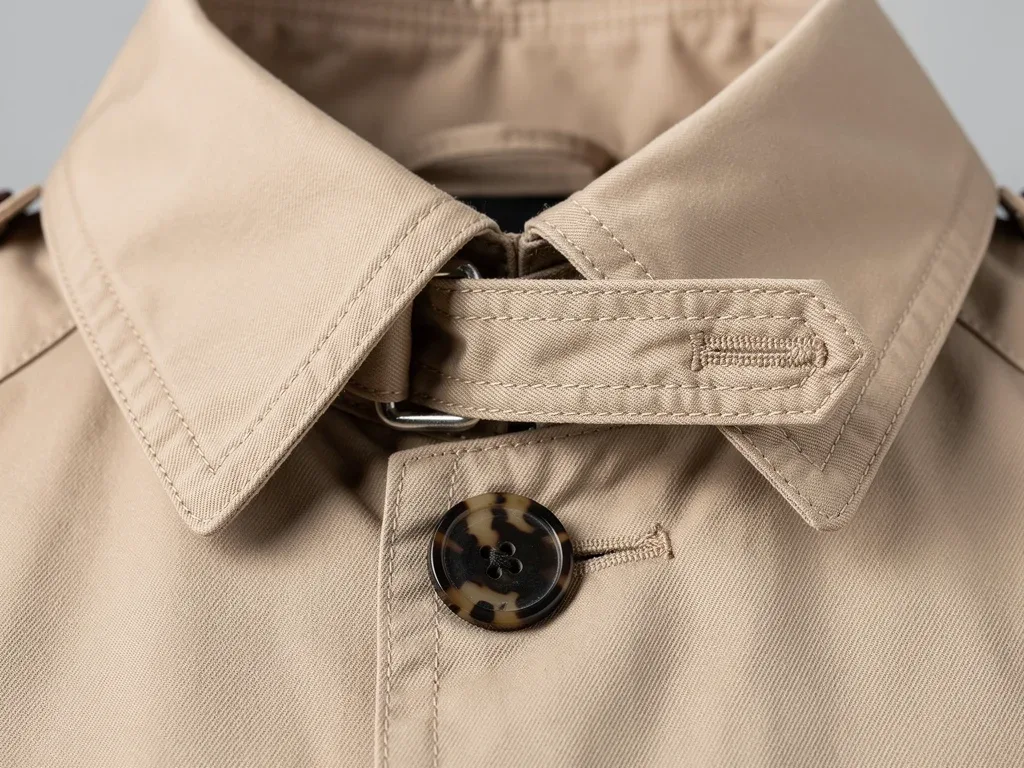
A structured collar is one of the most recognizable features of traditional trench coat design.
Many heritage-inspired styles also include a throat latch or separate fastening piece that helps close the collar more securely.
These details contribute to the practical character of a heritage quality trench coat, particularly when they are designed to function rather than simply decorate the garment.
Why a Structured Collar Matters
A properly constructed collar should sit comfortably around the neck and maintain an appropriate shape when worn open or raised.
Its structure affects how the coat frames the face and how effectively the upper opening can be adjusted in windy conditions.
Collar proportions also influence the overall silhouette, making this detail important for both comfort and visual balance.
How to Inspect the Throat Latch
A functional throat latch should attach securely without causing uncomfortable pressure around the neck.
Check the placement of buttons, stitching, and fastening points to ensure they appear stable and well finished.
The best construction allows the collar to remain comfortable while providing the additional coverage intended by the design.
3. Epaulets and Storm Flaps: Functional Military Details
Epaulets and storm flaps are prominent design elements associated with the military heritage of the trench coat.
Although these features often serve decorative purposes in contemporary fashion, their original forms were connected with the practical needs of military clothing.
For a heritage quality trench coat, careful attachment and appropriate proportions are more important than the mere presence of these historical details.
The Purpose of Shoulder Epaulets
Epaulets are fabric straps positioned on the shoulders and generally secured with buttons or other fasteners.
Historically, shoulder details on military uniforms served purposes associated with rank, identification, and securing certain equipment.
On modern trench coats, they primarily contribute to the recognizable silhouette, although their construction can still reveal the quality of the garment's finishing.
What Makes a Good Storm Flap?
A storm flap is an additional layer of fabric positioned over part of the upper chest or shoulder area.
Its design can help redirect some rainwater away from vulnerable areas, depending on how the garment is constructed and worn.
Examine whether the flap lies smoothly, follows the coat's shape, and is attached securely without excessive tension or uneven stitching.
Secure Epaulets: Shoulder straps should be attached firmly.
Balanced Proportions: Details should complement the coat's silhouette.
Well-Constructed Storm Flap: The fabric should sit correctly without unnecessary bunching.
Consistent Finishing: Seams and fastening points should look clean and dependable.
4. Belt and D-Rings: Practical Design and Visual Balance
The belted waist is a defining characteristic of traditional trench coat styling.
A carefully constructed belt allows the wearer to adjust the silhouette while helping the overlapping front panels remain in position.
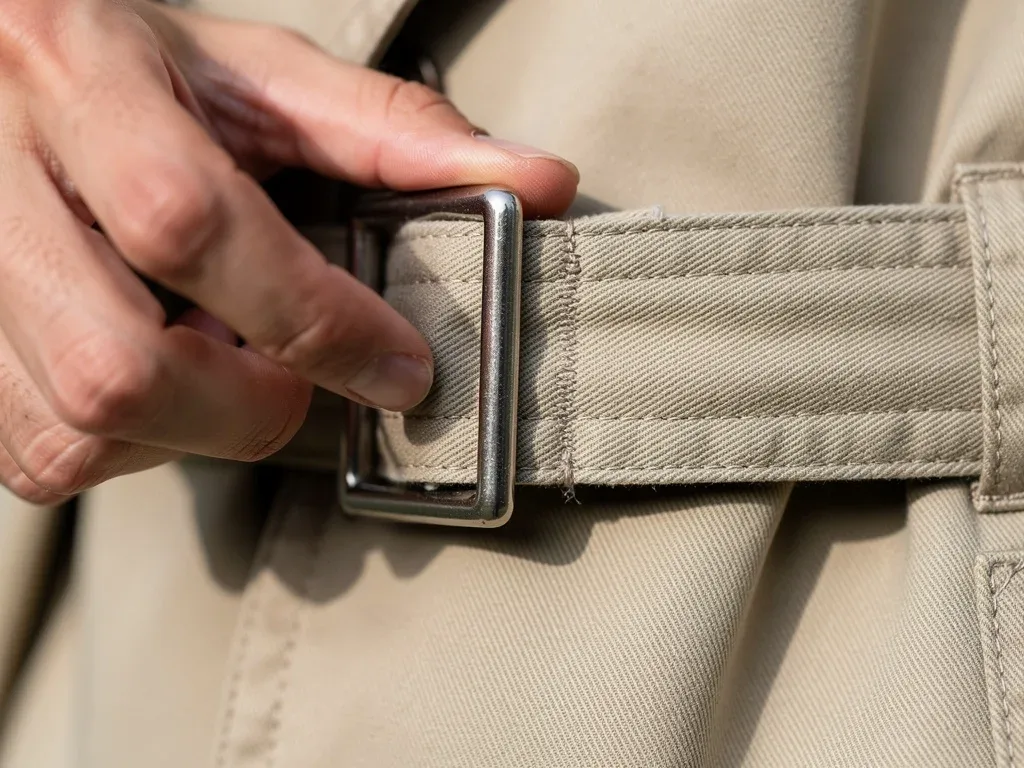
In a heritage quality trench coat, the belt, loops, buckle, and any accompanying D-rings should feel consistent with the overall quality of the garment.
Evaluating Belt Construction
A well-designed belt should be wide enough to complement the coat and long enough to fasten comfortably.
Its loops should remain secure when the belt is adjusted, while the buckle should operate smoothly without unnecessary resistance.
Look for evenly finished edges and reinforced attachment points, especially where the belt experiences repeated tension.
What D-Rings Tell You About a Trench Coat
D-rings are metal fittings commonly associated with traditional trench coat belts and military-inspired styling.
They have historical associations with equipment attachment, although their specific uses varied and modern examples are often largely decorative.
Their presence is not proof of authenticity or quality. More meaningful considerations include metal finishing, attachment strength, and whether the hardware feels proportionate to the garment.
How the Belt Influences Fit
A belt can create a more defined waist or allow the coat to be worn with a relaxed silhouette.
However, excessive tightening may distort the front panels or place unnecessary strain on the fabric.
When trying on a heritage quality trench coat, adjust the belt while standing and walking to confirm that the garment remains comfortable.
5. Sleeve Straps and Buckles: Adjustable Protection
Adjustable cuff straps are another recognizable detail of traditional trench coats.
These straps help the wearer change how closely the sleeve opening fits around the wrist or clothing worn underneath.
In a heritage quality trench coat, the straps should be practical, easy to adjust, and strong enough to withstand repeated fastening.
Understanding Cuff Strap Functionality
Cuff straps can help reduce the amount of wind entering through a loose sleeve opening.
They may also contribute to the coat's appearance by creating a cleaner finish around the wrist.
However, a tightened cuff alone does not make an entire garment waterproof, and overall weather resistance depends on several construction details.
Checking Buckles and Attachment Points
Inspect the buckle for smooth operation and signs of weak finishing or poorly aligned components.
Check the stitching around the sleeve strap and the point where it attaches to the coat.
The fastening system should remain secure without damaging the fabric or creating uncomfortable pressure during movement.
6. Lining and Interior Details: Quality Beneath the Surface
The interior of a trench coat can reveal construction details that are not immediately visible when the garment is worn.
Linings, inner seams, pocket construction, and finishing techniques all influence comfort and long-term usability.
A well-made heritage quality trench coat should feel thoughtfully finished inside as well as outside, regardless of whether the lining features a traditional check pattern.
Why Lining Construction Matters
A lining can make it easier to put a coat on over shirts, sweaters, or other layers.
It may also improve comfort and help protect certain internal seams or fabric surfaces during regular wear.
However, some high-quality trench coats are partially lined or unlined, so a fully lined interior is not automatically a universal requirement for superior construction.
Inspecting Interior Seams and Pockets
Check for neat stitching, secure pocket attachments, and fabric edges that are properly finished.
Loose threads, distorted seams, or poorly aligned lining panels may indicate construction issues that deserve closer inspection.
These interior details are especially useful when comparing similarly priced coats that appear nearly identical from the outside.
Are Removable Linings Worth Considering?
Some trench coats feature removable inner layers designed to provide additional warmth during cooler weather.
These systems may increase versatility, allowing the wearer to adjust the garment for different seasonal conditions.
However, the usefulness of a detachable lining depends on climate, comfort preferences, and whether the extra layer fits correctly inside the coat.
7. Back Vent and Pleat: Movement and Drape
A back vent or pleat is an important construction detail that influences how a trench coat moves when walking or sitting.
Traditional designs frequently include a rear opening that can help provide mobility without requiring the entire coat to be excessively loose.
For a heritage quality trench coat, the vent should function comfortably while maintaining the intended silhouette.
How a Back Vent Improves Movement
A properly designed vent allows the lower portion of the coat to separate slightly when the wearer takes longer steps.
This can be particularly useful for longer trench coats that extend below the hips or toward the knees.
Without adequate room for movement, the fabric may pull awkwardly around the lower body or become uncomfortable during walking.
What to Look for in Pleat Construction
Inspect the area where the vent begins, since this point may experience repeated tension during movement.
Well-finished construction should help the opening retain its shape without visible distortion or weakened stitching.
When trying on a heritage quality trench coat, walk, sit, and turn to observe whether the back panel moves naturally.
8. Buttons and Hardware: Small Details That Reveal Craftsmanship
Buttons, buckles, and other fastening components are easy to overlook, but they influence how a trench coat performs over time.
These elements experience repeated use, making attachment strength and material quality especially important.
When evaluating a heritage quality trench coat, inspect the hardware as carefully as the main fabric and overall fit.
How to Identify Well-Made Buttons
Trench coat buttons can be manufactured from horn, corozo, resin, or other suitable materials.
Material alone does not determine quality, because even a premium button can become unreliable when poorly attached.
Check that each button sits securely, has clean edges, and aligns correctly with its corresponding buttonhole.
Why Buttonholes and Stitching Matter
Buttonholes should be neatly finished to reduce fraying during repeated fastening.
Consistent stitching and suitable reinforcement can contribute to the durability of frequently used closures.
Uneven construction, loose threads, or damaged fabric around buttonholes may suggest that the garment needs closer inspection before purchase.
Evaluating Metal Buckles and D-Rings
Metal components should feel sturdy and have surfaces free from obvious sharp edges or poor finishing.
Depending on the design, some hardware may use protective coatings or coverings that improve appearance and comfort.
The key consideration is whether these details operate reliably and complement the construction of the heritage quality trench coat.
How to Evaluate a Heritage Quality Trench Coat Before Buying
Understanding individual construction details is useful, but the overall quality of a garment becomes clearer when the elements are considered together.
A coat with traditional styling may still perform poorly if the fit is uncomfortable or important components are weakly constructed.
For shoppers seeking a heritage quality trench coat, a practical inspection can help distinguish a thoughtfully made garment from one that relies primarily on visual appeal.
Check the Fit and Shoulder Construction
The shoulders should sit comfortably without excessive pulling or restricting natural arm movement.
Try the coat over the type of clothing you expect to wear underneath, especially if you plan to use it during cooler weather.
Raise your arms, sit down, and walk to determine whether the fit remains comfortable during ordinary activities.
Compare Construction Instead of Brand Reputation Alone
Established brands may offer recognizable trench coat designs, but a famous label does not guarantee that every garment meets the same construction standard.
Material specifications, stitching quality, hardware, finishing, and customer support can provide useful information when comparing options.
Pay attention to the actual garment rather than assuming that a higher price automatically ensures better performance or longevity.
Consider Repairability and Long-Term Maintenance
Buttons, belts, buckles, and certain seams may be repaired or replaced, depending on the construction of the coat.
Garments with accessible components and durable materials may offer greater opportunities for maintenance over time.
These considerations can help shoppers evaluate whether a heritage quality trench coat will remain practical after years of ordinary use.
How to Style a Heritage Quality Trench Coat
The classic trench coat is valued partly because its familiar silhouette works with several different clothing styles.
Neutral colors, balanced proportions, and understated details can make it easier to combine with clothing already in a wardrobe.
Choosing a suitable fit and length allows a heritage quality trench coat to complement casual outfits as well as more polished everyday combinations.
Creating a Classic Everyday Outfit
A beige or navy trench coat can be paired with straight-leg trousers, a lightweight sweater, and comfortable leather shoes.
For a more casual appearance, the same coat may work with jeans, a simple shirt, and understated sneakers.
The goal is to balance the structured outerwear silhouette with garments that fit the occasion and personal style.
Choosing the Right Length and Color
Trench coats are available in different lengths, from shorter designs to versions that extend below the knees.
Longer coats may create a more dramatic silhouette, while shorter options can feel easier to wear in casual situations.
Classic shades such as stone, khaki, navy, and black are versatile, but the most suitable choice depends on individual wardrobe preferences.
Care and Maintenance for Long-Lasting Trench Coats
Proper maintenance can influence how well a coat retains its appearance and functionality over time.
Care requirements depend on fabric composition, lining, hardware, and any treatments applied during manufacturing.
To preserve a heritage quality trench coat, follow the manufacturer's care label rather than relying on one cleaning method for every material.
Cleaning and Storage Recommendations
Some trench coats require professional cleaning, while others may allow specific home-care procedures.
After use, allow the garment to dry appropriately before storing it, particularly if it has been exposed to rain.
Use a suitable hanger that supports the shoulders and avoid overcrowding the storage area, which can create unnecessary creasing.
Preserving Weather-Resistant Properties
Water-repellent performance may change over time because of wear, washing, and exposure to environmental conditions.
Some manufacturers offer specific cleaning or reproofing guidance for their outerwear products.
Before applying any treatment, confirm that it is suitable for the coat's fabric and construction to avoid damaging the material.
Heritage Trench Coat Quality: Key Details at a Glance
The eight features explored in this guide provide practical reference points for evaluating construction and everyday functionality.
Although not every well-made trench coat includes every traditional detail, careful materials and dependable finishing remain important indicators.
The following table summarizes several essential characteristics of a heritage quality trench coat.
Key Detail | Heritage Quality Indicator |
|---|---|
Fabric | Consistent weave, appropriate weight, durable construction, and clearly described weather-resistant properties. |
Collar & Latch | A structured collar, secure fastening, and comfortable coverage when adjusted. |
Epaulets & Flap | Well-attached shoulder straps and a properly constructed storm flap that complements the overall design. |
Belt & D-Rings | Reliable buckle operation, secure loops, neatly finished belt edges, and durable hardware. |
Frequently Asked Questions About Trench Coat Quality
What is gabardine and why is it important for a trench coat?▼
Gabardine is a tightly woven fabric commonly associated with traditional trench coat construction. Cotton gabardine became popular because it offered durability, comfort, and resistance to certain weather conditions when appropriately manufactured. However, not all gabardine garments provide the same level of rain protection, so buyers should review fabric specifications and manufacturer claims.
How can I tell if a trench coat has good quality buttons?▼
Inspect the button material, finishing, attachment, and alignment with the buttonholes. Quality buttons should be securely fastened and free from obvious defects. Materials such as horn, corozo, and durable resin may be used, but construction matters as much as material choice. Neatly finished buttonholes and reliable stitching are particularly useful indicators.
What is the purpose of a storm flap on a trench coat?▼
A storm flap is an additional section of fabric associated with traditional weather-resistant trench coat design. It can help redirect some rainwater away from particular areas of the garment, depending on its construction. Modern storm flaps may also serve decorative purposes, so their presence alone does not guarantee that a coat is waterproof.
Are D-rings on a trench coat purely decorative now?▼
D-rings are strongly associated with the military-inspired design of classic trench coats. Although historical versions had equipment-related uses, D-rings on contemporary fashion coats are often primarily decorative. Their presence does not prove authenticity or superior quality. Buyers should instead consider the construction, finishing, and overall practicality of the garment.
Why is the lining important for a quality trench coat?▼
A lining can improve comfort, make layering easier, and contribute to the interior finish of a trench coat. Well-made linings should be securely attached and appropriately constructed for the garment's intended use. However, some high-quality trench coats are partially lined or unlined, so the absence of a full lining does not automatically indicate poor craftsmanship.
Conclusion: Recognizing Enduring Trench Coat Quality
A heritage quality trench coat stands out through the combination of suitable materials, careful tailoring, reliable hardware, and functional design.
Understanding the eight key details helps buyers look beyond recognizable styling and assess how a garment is actually made. This knowledge also supports more thoughtful decisions about timeless fabrics and clothing longevity.
Whether selecting a traditional gabardine coat or a modern interpretation, prioritizing fit, construction, and maintenance can help create a wardrobe built around lasting usefulness rather than short-lived trends. Explore more about classic fashion investments and long-term wardrobe value.