Tailoring Secrets: 3 Adjustments for Bespoke Blazers
Advertisements
The right blazer fit adjustments can make an off-the-rack jacket look significantly more refined without requiring the expense or process of true bespoke tailoring.
The biggest improvements usually come from starting with the correct shoulder structure, refining sleeve length and shaping the torso so the jacket follows the wearer cleanly.
Not every blazer can be transformed successfully, however, because fabric, construction, proportions and the amount of alteration required all affect the final result.
Why Blazer Fit Matters More Than the Label
A blazer can use expensive fabric and still look awkward when its proportions do not work with the body of the person wearing it.
Conversely, a reasonably priced ready-to-wear jacket can look polished when the shoulder line, sleeve length and body shape are balanced correctly.
This is why tailoring focuses on silhouette and proportion rather than assuming that a designer label or higher price automatically creates a superior fit.
Good Fit Creates Cleaner Lines
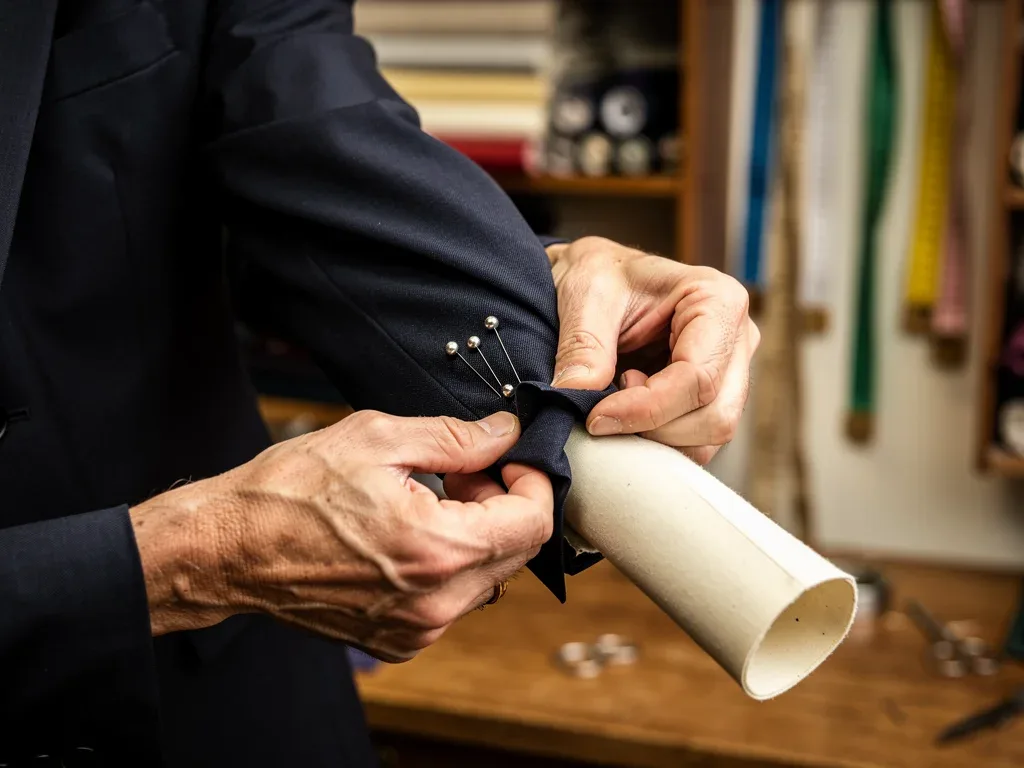
A properly fitting jacket should fall cleanly from the shoulders without obvious pulling, collapsing or large amounts of excess fabric disrupting its shape.
Tension lines, sleeve-head divots, excessive fabric around the waist and sleeves covering the hand can all signal that the proportions need attention.
Effective alterations reduce these problems while preserving enough ease for sitting, reaching and wearing the clothing normally layered underneath.
Adjustment 1: Get the Shoulders Right First
The shoulders form much of a tailored jacket's visual foundation because they influence the upper chest, sleeve head and overall line of the garment.
A good shoulder fit creates a smooth transition into the sleeve without obvious dents, pulling or excessive fabric extending beyond the wearer's frame.
Because changing this area substantially can require reconstructing several interconnected sections, the best strategy is usually to buy the shoulders correctly from the start.
Shoulder Seams Do Not Need to Follow One Absolute Rule
Advice often says the shoulder seam must end exactly at the wearer's natural shoulder bone, but tailored-jacket styles can intentionally incorporate slight extension.
A more useful standard is whether the shoulder line appears clean, balanced and intentional without collapsing beyond the upper arm or pulling inward.
Different tailoring traditions can use natural, padded or extended shoulders, meaning visual harmony matters more than one rigid seam location.
How to Spot Shoulders That Are Too Wide
Shoulders that extend too far can produce sagging or a visible dent near the top of the sleeve where the unsupported jacket structure begins to collapse.
The garment may also appear generally oversized even when the waist and sleeve length seem reasonably close to the wearer's measurements.
Slight extension can be intentional, but substantial overhang combined with sleeve-head distortion usually indicates that another jacket size would be a better starting point.
Shoulders That Are Too Narrow Create Different Problems
A narrow shoulder can pull fabric tightly across the upper arm and distort the point where the sleeve joins the body of the jacket.
The wearer may also experience restricted movement because the jacket lacks sufficient width across an area that is difficult to enlarge substantially.
If significant tension remains even when the jacket is worn normally, tailoring other areas is unlikely to solve the underlying structural mismatch.
Major Shoulder Alterations Are Usually Impractical
Reducing or expanding shoulder width can require removing sleeves, modifying the armhole and rebuilding the sleeve head while preserving the jacket's balance.
That makes the work considerably more complex than shortening a sleeve or taking excess fabric from a side or back seam.
Proper Cloth similarly recommends choosing another base size or remaking a jacket rather than relying on major shoulder-width alteration.
Shoulder Slope Is a Separate Issue
Two people with similar shoulder width can still need different jackets because one has square shoulders while another has a more pronounced natural slope.
An incorrect slope can create wrinkles behind the collar or diagonal folds around the upper back and armhole even when overall width appears correct.
A skilled tailor can sometimes correct moderate slope or asymmetry, but major structural differences may again make another jacket the more sensible option.
Adjustment 2: Refine the Sleeve Length
Sleeve length is one of the most visible and frequently practical blazer fit adjustments, making it an effective way to sharpen a ready-to-wear jacket.
Sleeves extending well over the hand can make the entire garment appear oversized, while unusually short sleeves can disrupt otherwise balanced proportions.
The correct endpoint depends partly on styling, but the sleeve should generally look intentional relative to the hand, shirt cuff and rest of the jacket.
Traditional Menswear Often Shows Some Shirt Cuff
A common classic reference places the jacket sleeve near the wrist bone while allowing approximately one-quarter to one-half inch of shirt cuff to remain visible.
That amount can create visual balance between the shirt collar and cuffs, although more conservative or contemporary styling may show slightly different amounts.
Proper Cloth describes the same 0.25-to-0.5-inch range as a standard tailored-jacket reference rather than an unbreakable rule.
Women's Blazer Sleeves Allow More Variation
Women's tailoring includes full-length, bracelet-length, cropped and intentionally oversized sleeves, making one universal wrist rule particularly inappropriate.
The appropriate length depends on the jacket design, intended silhouette and the garments worn underneath rather than gender alone.
A classic tailored blazer may finish near the wrist, while another design can deliberately expose more forearm without being incorrectly fitted.
Evaluate Length With the Arms Relaxed
Sleeve length should normally be assessed while standing naturally because bending or reaching temporarily changes where the cuff sits on the arm.
Both sleeves should also be checked separately because differences in arm length or shoulder height are common and can become visible in tailored clothing.
A good tailor can compensate for moderate asymmetry when shortening sleeves rather than automatically making both sides numerically identical.
Functional Buttonholes Can Limit Sleeve Shortening
Some jackets have working buttonholes cut into the cuff, leaving less room to shorten the sleeve from the bottom without disturbing the original proportions.
Removing too much fabric can leave the lowest button uncomfortably close to the edge or make the entire cuff arrangement look compressed.
This detail should be checked before buying a blazer that requires major sleeve shortening, especially when the existing cuff has functional surgeon's buttons.
Shortening From the Shoulder Is More Complex
When cuff details prevent sufficient shortening from below, a tailor may sometimes alter the sleeve from the top where it connects to the armhole.
The process involves removing and resetting the sleeve while maintaining sleeve pitch, sleeve-head shape and any pattern alignment in the fabric.
Because that procedure is substantially more involved, a blazer requiring major sleeve reduction may be less attractive than another size with better original proportions.
Adjustment 3: Shape the Waist and Midsection
The third major alteration involves refining the body of a jacket when the shoulders and chest fit but the torso contains unnecessary excess fabric.
A tailor can often take in the sides or back to create a cleaner transition from the chest through the waist and toward the hips.
This process is commonly described as waist suppression, although the amount required depends on body shape and the intended style of the jacket.
Waist Suppression Should Not Mean Maximum Tightness
An aggressively narrowed waist can produce tension around the fastening button and horizontal wrinkles across the front or lower back.
The goal is a smooth taper that follows the torso while leaving enough room for normal breathing, sitting and movement.
Proper Cloth similarly recommends a clean midsection without tension lines around the buttons or fabric catching across the lower back.
Different Jacket Styles Need Different Amounts of Shape
A highly structured business blazer may intentionally have a more defined waist, while relaxed tailoring can use a straighter and softer silhouette.
Trying to suppress every jacket aggressively can work against the original design and distort the relationship between chest, waist and hem.
The tailor should therefore preserve the character of the garment rather than forcing every blazer into the same hourglass or V-shaped profile.
The Chest Must Still Drape Cleanly
Taking in the waist cannot compensate for a jacket that is already too tight through the chest or upper back.
If the lapels bow outward or obvious tension forms around the upper torso, additional suppression can make those problems more visible.
Proper Cloth recommends enough chest room for the lapels to lie cleanly without bending outward or producing unnecessary tension.
Buttoning the Jacket Reveals Important Fit Clues
A tailored blazer should generally be evaluated both open and in its intended buttoned position because closing it introduces tension across the torso.
Extreme pulling around the button can indicate that the waist or chest is too tight rather than beautifully shaped.
Large amounts of loose fabric, on the other hand, may indicate that the torso can be taken in while preserving adequate comfort.
A Small Amount of Shape Is Often Enough
Tailoring can look artificial when too much fabric is removed simply to make a jacket appear extremely slim.
A subtle adjustment can often produce a stronger visual improvement because it cleans the silhouette without changing the underlying proportions dramatically.
The objective is to make the blazer look naturally appropriate for the wearer's frame rather than visibly altered or restrictive.
Jacket Length Also Changes the Overall Proportion
Although shoulder fit, sleeves and torso shape provide the biggest practical improvements, overall jacket length contributes heavily to how balanced the garment appears.
Traditional tailoring often uses a longer proportion, while contemporary blazers may intentionally sit somewhat shorter for a more casual appearance.
There is therefore room for stylistic preference as long as the jacket length remains visually balanced with the wearer's torso and legs.
Shortening the Jacket Has Limits
Removing too much length can distort the distance between the pockets, fastening buttons and bottom edge of the blazer.
Even when shortening is technically possible, the result may look unbalanced because those details remain in their original locations.
Minor adjustments can work, but a dramatically incorrect body length is another reason to consider a different size or model instead.
Armholes Are More Complicated Than They Look
The original article suggests that low armholes can simply be raised, but this is not usually one of the easy alterations performed on a finished jacket.
The armhole connects directly to sleeve shape, chest dimensions and shoulder construction, making substantial modification structurally complicated.
A jacket with fundamentally unsuitable armholes is usually better replaced than treated as a straightforward tailoring project.
Higher Armholes Can Improve Mobility When Designed Correctly
Counterintuitively, a properly shaped higher armhole can allow the arm to move with less disruption to the jacket body than an excessively low one.
That benefit depends on the original pattern and sleeve construction, not simply on making the opening smaller after the jacket has been manufactured.
For this reason, armhole shape is best considered when selecting the blazer rather than treated as one of the standard after-purchase adjustments.
Collar Gaps Can Signal Several Fit Problems
A jacket collar should normally remain close to the shirt collar instead of visibly standing away from the back of the neck.
Gapping can originate from posture, shoulder slope, chest fit or other relationships within the jacket rather than one simple excess-fabric problem.
A tailor should identify the underlying cause before changing the center back seam or collar structure.
Not Every Wrinkle Requires Alteration
Tailored clothing moves with a three-dimensional body, so expecting a blazer to remain completely wrinkle-free in every posture is unrealistic.
The important distinction is between temporary movement wrinkles and persistent tension or collapsing that remains while the wearer stands naturally.
Alterations should address real fit problems rather than attempting to eliminate every fold created by ordinary movement.
Fabric and Construction Affect What Can Be Altered
Tailoring possibilities depend partly on how much seam allowance exists and how the lining, canvas, pockets and decorative details were originally assembled.
A highly structured jacket can require considerably more work to modify than an unlined or lightly constructed casual blazer.
The decision should therefore be based on the garment itself rather than assuming that one alteration menu applies universally.
Synthetic Fabric Is Not Automatically Impossible to Tailor
The original article suggests that wool generally tailors better than synthetic materials, but fiber composition alone does not determine alterability.
A polyester or blended blazer can still be altered successfully when the construction provides enough seam allowance and the fabric responds appropriately.
Construction, pressing behavior and the specific alteration usually matter more than simply dividing garments into natural and synthetic categories.
Know When Another Size Is the Better Choice
Tailoring works best when the base garment is already close to the correct proportions and needs refinement rather than structural reconstruction.
A blazer that is wrong in shoulders, chest, armholes and length simultaneously can become expensive to rebuild and still retain compromised proportions.
Trying another size or another brand's pattern often provides a better starting point and allows alteration money to be spent where it makes a visible difference.
Different Brands Fit Different Bodies
Ready-to-wear patterns vary in shoulder width, chest shape, waist suppression, sleeve pitch and overall length even when the size label is identical.
Someone who repeatedly needs major alteration from one brand may simply be better matched to another manufacturer's base pattern.
Finding the right starting block can reduce tailoring work and produce a more natural result than attempting to reconstruct an unsuitable blazer.
Tailoring Costs Should Be Quoted Locally
The original article provides fixed dollar ranges for sleeves, waist and shoulder work, but alteration pricing varies substantially by city and garment construction.
Working buttonholes, lining, pattern matching and the amount of reconstruction involved can all change the price of what appears to be the same alteration.
A local quote from the tailor who has physically inspected the blazer is therefore more useful than a universal online price estimate.
Compare Alteration Cost With Garment Value
A technically possible alteration may still make little economic sense when its cost approaches the price of replacing the blazer with one that already fits better.
Expensive work can be justified for a high-quality or sentimental garment, but the calculation will differ for an inexpensive ready-to-wear jacket.
Assessing feasibility before purchase is especially valuable when shoulders, sleeves or body length already look substantially incorrect.
A Tailored Look Is Not the Same as Bespoke
Strategic alterations can make an off-the-rack blazer fit extremely well, but that does not convert the garment into a true bespoke jacket.
Bespoke tailoring generally involves creating an individualized pattern and constructing the garment around the client's measurements and fitting process.
An altered ready-to-wear blazer should therefore be described as well tailored rather than literally bespoke.
The Visual Effect Can Still Be Excellent
Most observers notice proportion, drape and coherence before they know how a garment was purchased or constructed.
An inexpensive blazer with excellent fit can therefore appear more polished than a prestigious garment whose shoulders, sleeves or torso are visibly wrong.
The practical goal is not to imitate the production method of bespoke tailoring but to achieve a clean and intentional silhouette.
Finding a Tailor for Blazer Alterations
Experience with tailored jackets matters because blazers contain structural elements that differ from ordinary shirts, trousers or simple casual garments.
A capable tailor should examine how the jacket sits on the body before recommending changes rather than altering each measurement independently.
They should also explain when an adjustment is unlikely to produce a good result instead of accepting every alteration simply because it is technically possible.
Start With a Clear Fit Goal
Bring the shirt, trousers or typical layers you plan to wear with the blazer so the tailor can assess the garment in realistic conditions.
Explain whether you prefer a traditional, relaxed or slimmer silhouette instead of asking only to make the jacket “tighter.”
Specific goals help the tailor preserve comfort and proportion while deciding exactly how much fabric should be removed or adjusted.
Proper Care Helps Preserve the Tailored Shape
After alterations, appropriate storage and cleaning can help the blazer maintain its structure, surface appearance and pressed lines.
A hanger with enough shoulder support is preferable to a thin wire hanger that concentrates weight into a narrow area.
Allowing the jacket to rest and air between wears can also reduce the need for unnecessary cleaning after every use.
Dry Cleaning Should Not Be Automatic or Excessive
The original article recommends regular dry cleaning, but a blazer generally should be cleaned according to its care label and actual condition.
Repeated chemical cleaning and pressing can gradually place stress on fabric and construction, so unnecessary cleaning offers little benefit.
Light brushing, airing and prompt spot treatment can often maintain a jacket between professional cleanings when the manufacturer's instructions permit.
Three Blazer Fit Priorities at a Glance
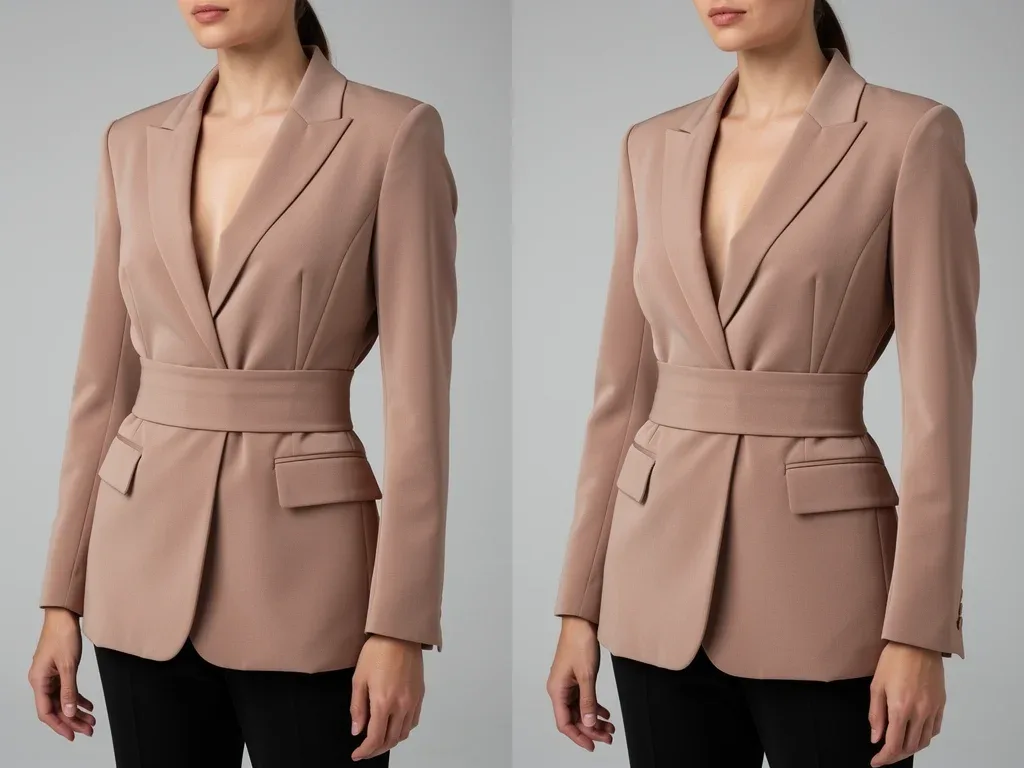
The most effective blazer fit adjustments begin with selecting a garment whose structural proportions are already reasonably close to the wearer's body.
Shoulders deserve priority at purchase, while sleeve length and midsection shaping are frequently more practical areas for post-purchase refinement.
The table below separates the three major priorities from alterations that can become considerably more complicated.
Use Tailoring to Refine Rather Than Rebuild
A good ready-to-wear blazer should not require reconstruction in every region before it becomes wearable.
The best candidates already have appropriate shoulders, chest and overall length, leaving relatively localized alterations to improve the final presentation.
This approach usually preserves the original proportions while delivering the clean, personalized appearance that makes tailoring worthwhile.
Fit Area | Priority | Practical Guidance |
|---|---|---|
Shoulders | Get right at purchase | Major changes are complex and can affect several connected parts of the jacket. |
Sleeve Length | Common alteration | Usually practical, but working buttonholes can restrict shortening from the cuff. |
Waist / Midsection | Common alteration | Can refine the silhouette when chest and shoulders already fit correctly. |
Jacket Length | Limited alteration | Large changes can distort pocket and button proportions. |
Armholes | Complex alteration | Substantial changes interact with sleeves, chest and shoulder construction. |
Frequently Asked Questions About Blazer Tailoring
Which blazer fit area is most important?
The shoulders are one of the most important starting points because major shoulder alterations are complicated and can affect several connected parts of the jacket.
Should the shoulder seam sit exactly on the shoulder bone?
Not necessarily. Some tailored styles use slight shoulder extension; what matters most is a smooth line without excessive sagging, divots or tension.
How much shirt cuff should show below a men's blazer?
A traditional reference is approximately one-quarter to one-half inch, although personal style and shirt sleeve length can justify some variation.
Can sleeves with working buttonholes be shortened?
Usually only to a limited degree from the cuff; larger changes may require more complex alteration from the top of the sleeve.
What is waist suppression?
It is the shaping of the jacket through the midsection to create a cleaner taper while preserving sufficient room for comfortable movement.
Should every blazer have a strongly defined waist?
No. Relaxed, classic and contemporary jackets can intentionally use different amounts of shaping depending on the original design.
Can a tailor raise low armholes easily?
Usually not. Significant armhole alterations are structurally complicated because they interact with the sleeve, chest and shoulder pattern.
Can any off-the-rack blazer be tailored successfully?
No. Garments requiring major changes to several structural areas may be better replaced with another size or pattern.
How much does blazer tailoring cost?
Prices vary substantially by location, construction and complexity, so a local quote after physical inspection is more reliable than a universal price range.
Should a blazer be dry cleaned regularly?
It should be cleaned according to its care label and actual need rather than automatically after a fixed number of wears.
Conclusion
The most useful blazer fit adjustments are those that refine an already suitable garment rather than trying to reconstruct a fundamentally incorrect jacket.
Starting with balanced shoulders, correcting sleeve length and shaping the midsection can dramatically improve the appearance of many off-the-rack blazers.
By respecting construction limits and using a skilled tailor for targeted changes, a ready-to-wear jacket can achieve a clean, personalized and highly polished fit.