Navy vs Black: Elevate Neutral Outfits with Midnight Tones
Advertisements

The ongoing discussion around Navy vs Black: Why Midnight Tones Can Elevate Neutral Outfits reflects a broader interest in softer, more nuanced alternatives to traditional black.
Navy offers much of the versatility associated with black while creating a slightly less severe contrast with beige, cream, grey, brown, denim, and other wardrobe neutrals.
For anyone refining their personal style, understanding how these two dark neutrals behave differently can make everyday outfit building easier.
The Enduring Appeal of Midnight Tones
Deep navy has long been associated with tailoring, uniforms, knitwear, outerwear, and other classic fashion staples.
Its depth allows it to function much like black while introducing enough blue to create a softer visual relationship with many colors already found in a neutral wardrobe.
This combination of familiarity and subtle variation explains why navy continues to work across professional, casual, evening, and transitional outfits.
Navy and Black Create Different Visual Effects
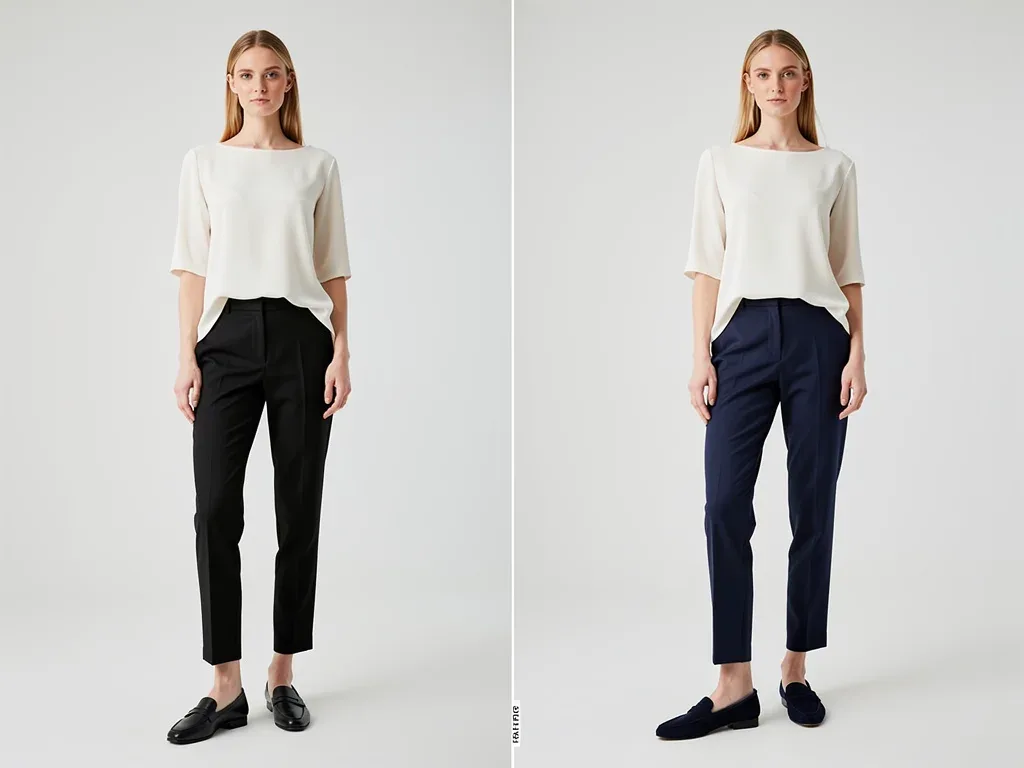
Black typically creates a strong visual boundary, especially when combined with pale neutrals such as white, ivory, stone, or light grey.
Navy can reduce that contrast slightly, producing an outfit that still feels defined but may appear less stark depending on the fabric, lighting, and surrounding colors.
Neither effect is inherently better, making the navy vs black decision primarily a styling choice based on the mood and degree of contrast desired.
Elevating Neutral Outfits: The Navy Advantage
Navy can add subtle color to a neutral outfit without making the ensemble feel noticeably colorful, which is one reason it works well in minimalist wardrobes.
A cream sweater paired with navy trousers, for example, produces a different visual effect from the same sweater worn with black, even though both combinations remain neutral.
This slight variation can make familiar clothing combinations feel refreshed without requiring major changes to silhouettes, fabrics, or accessories.
The Soft Contrast of Navy with Browns and Greys
Navy works particularly well beside camel, chocolate brown, taupe, charcoal, and lighter grey because each color remains visually distinct without producing an extreme contrast.
Pairing navy with brown can create a warmer palette, while navy and grey tend to produce a cooler and more restrained combination suitable for tailoring and layering.
These combinations offer alternatives to relying on black every time a dark neutral is needed, increasing the number of outfits that can be created from the same wardrobe.
Navy complements many camel and brown shades.
It creates moderate contrast with light grey.
It coordinates naturally with beige and cream.
Different textures can make tonal navy combinations more dimensional.
The Art of Accessorizing with Navy
Navy provides a flexible background for metallic accessories, allowing both warm and cool finishes to work depending on the rest of the outfit.
Gold can introduce warmth, while silver can reinforce a cooler palette, and neither combination requires navy to be treated as a restrictive color.
Red, burgundy, green, tan, cream, and other accent colors can also stand out clearly against a dark navy foundation.
Gold jewelry can introduce warmth.
Silver accessories reinforce cooler combinations.
Burgundy, red, or green can provide stronger accents.
Tan and neutral footwear can soften the overall palette.
Wardrobe Essentials Reimagined in Navy
Replacing or supplementing selected black wardrobe essentials with navy can expand the number of combinations available without completely changing a capsule wardrobe.
A navy blazer, tailored trousers, coat, knit, skirt, or dress can serve the same foundational role as its black equivalent while interacting differently with warmer neutrals.
The goal does not need to be eliminating black, but rather using navy as an additional dark neutral when a softer or slightly more dimensional result is desired.
The Versatility of Navy Across Seasons
Navy can transition easily between seasons because its appearance changes significantly depending on fabric weight, accompanying colors, and overall styling.
During warmer months, navy pairs naturally with white, cream, pale blue, linen, denim, and lighter accessories, offering a dark base without relying exclusively on black.
In autumn and winter, it can be combined with burgundy, brown, forest green, grey, wool, suede, and heavier textures for a deeper seasonal palette.
Spring and Summer Styling
Navy works particularly well in spring and summer when used with crisp whites, pale neutrals, lighter fabrics, and relaxed silhouettes.
A navy dress, linen trouser, lightweight blazer, or knit can provide structure while still fitting comfortably within a warm-weather wardrobe.
This is one reason navy is frequently used in resort and nautical-inspired dressing, although it can work equally well without traditional nautical references.
Autumn and Winter Styling
Cold-weather fabrics such as wool, cashmere, corduroy, suede, and heavier denim give navy additional depth and make it suitable for layered outfits.
Combining navy outerwear with camel, chocolate, burgundy, or charcoal creates a rich palette without requiring strong or highly saturated colors.
Dark navy can also sit close to black visually, making it relatively easy to introduce into an existing winter wardrobe built around darker pieces.
Practical Styling Tips for Switching to Navy
The easiest way to explore navy is to replace only one black element at a time rather than attempting to rebuild an entire wardrobe around a new neutral.
Starting with trousers, a blazer, knitwear, or outerwear makes it possible to test how navy interacts with clothing already owned.
Once useful combinations become clear, additional navy pieces can be added selectively rather than purchased simply because the color is trending.
Pay Attention to the Shade
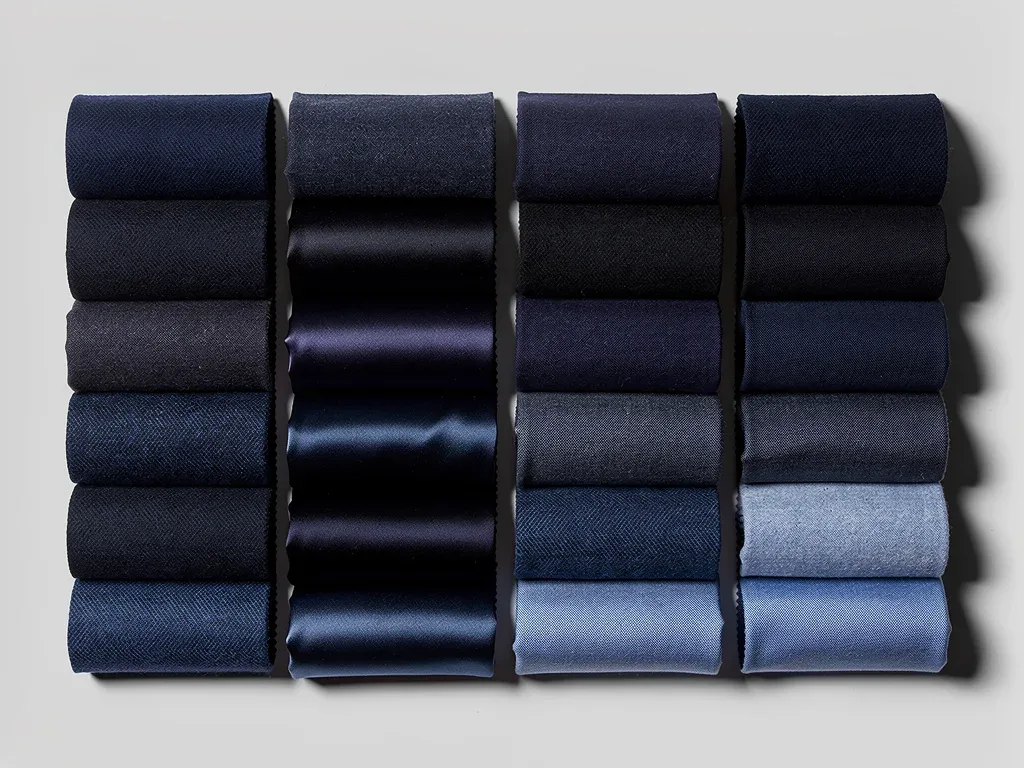
Navy is not a single exact color, and different versions can range from an almost-black midnight blue to noticeably brighter or more saturated shades.
Very dark navy is typically easiest to substitute for black, while clearer blue versions create a more visible color statement within an outfit.
Comparing the garment beside existing trousers, coats, shoes, and accessories can help determine whether the shade integrates naturally into the wardrobe.
Use Texture to Create Depth
Texture becomes particularly important when several navy pieces are worn together because it prevents a monochromatic outfit from appearing visually flat.
A wool coat, cashmere knit, satin skirt, cotton shirt, or structured trouser will each reflect light differently even when the underlying colors are similar.
Mixing surfaces and fabric weights can therefore make tonal navy dressing feel more intentional without introducing additional colors.
Can Navy and Black Be Worn Together?
Navy and black can be worn together, despite older style rules that sometimes discouraged combining the two dark shades.
The pairing usually works best when the difference between the colors appears intentional through clear proportions, distinct textures, or repeated use elsewhere in the outfit.
For example, navy trousers with black shoes and a black belt can create a cohesive combination rather than appearing like two accidentally mismatched dark colors.
How to Make the Combination Look Intentional
Repeating black or navy in more than one part of the outfit helps establish a visual pattern and makes the combination easier to understand.
Texture can also create separation, such as pairing a navy wool coat with black leather accessories or black denim with a navy knit.
Keeping the rest of the palette restrained allows the relationship between the two dark neutrals to become part of the styling rather than a distraction.
When Black Still Works Better
Black remains valuable because it provides a level of contrast and visual sharpness that navy does not always reproduce.
Minimalist outfits, monochromatic evening looks, certain formal dress codes, and graphic combinations may benefit specifically from the strength of true black.
The navy vs black question therefore should not be treated as a rule requiring one color to replace the other in every context.
Choosing Based on the Desired Effect
Black can be useful when the objective is maximum contrast, graphic clarity, or an intentionally severe and streamlined appearance.
Navy may be preferable when the same dark foundation is needed with slightly less contrast or when brown, cream, grey, or denim play a larger role.
Having access to both colors offers greater styling flexibility than treating either one as the universal solution for every neutral outfit.
The Cultural and Historical Significance of Navy
The term navy blue is connected historically with dark-blue naval uniforms, helping establish associations with uniforms, tailoring, structure, and institutional dress.
Over time, similar dark blues became established in suits, coats, school uniforms, workwear, sportswear, and many other categories of everyday clothing.
This long history helps explain why navy can feel simultaneously traditional and contemporary rather than functioning only as a temporary seasonal color trend.
Navy as a Modern Neutral
Contemporary fashion increasingly treats navy as a foundational color rather than limiting it to nautical styling or conservative business clothing.
Designers and street-style wardrobes frequently use it in tailoring, dresses, knitwear, coats, denim, and tonal combinations that emphasize its versatility.
This broader use makes navy especially useful for people who want a neutral wardrobe with more tonal variety than combinations dominated exclusively by black.
Key Point | Brief Description |
|---|---|
Visual Contrast | Navy generally creates a softer contrast than true black. |
Neutral Pairings | Works naturally with cream, beige, grey, brown, denim, and white. |
Seasonal Versatility | Can transition from lightweight summer clothing to winter tailoring and outerwear. |
Wardrobe Strategy | Best used as an additional dark neutral rather than a mandatory replacement for black. |
Frequently Asked Questions About Navy vs Black in Fashion
Is navy objectively better than black for neutral outfits?▼
No. Both are versatile dark neutrals, and the stronger choice depends on the desired contrast, surrounding colors, fabric, occasion, and personal preference. Navy often produces a softer effect, while black generally creates greater visual definition.
Is there evidence that navy improves 75% of neutral outfits?▼
No reliable fashion study or widely recognized dataset establishes a 75% figure. The idea that navy can elevate many neutral outfits is better understood as styling guidance rather than a measurable universal percentage.
Can navy be worn for formal occasions instead of black?▼
In many situations, yes. Dark navy suits, dresses, and tailored garments can be appropriate for numerous formal and professional settings. However, some specific dress codes may explicitly require black, so the event requirements should always be considered.
Can navy and black be worn together?▼
Yes. Navy and black can create a sophisticated combination when the contrast appears intentional. Repeating the colors, varying textures, and maintaining clear proportions can make the pairing feel cohesive.
Does navy work throughout the year?▼
Yes. Navy can be worn with white, pale blue, and lighter fabrics during warmer months, then combined with wool, brown, grey, burgundy, and heavier textures in autumn and winter.
Perspectives on the Evolving Neutral Palette
The conversation around Navy vs Black: Why Midnight Tones Can Elevate Neutral Outfits reflects a broader move toward treating neutral wardrobes as more varied than combinations of black, white, and beige alone.
Navy offers another foundational option that can make familiar pieces feel different without requiring dramatic colors or trend-driven purchases.
As classic fashion continues to evolve, the most practical approach is not replacing black entirely but learning when each dark neutral creates the effect you want.