Preserving Wool & Cashmere: 5 Steps to Extend Garment Life
Advertisements
Preserving wool and cashmere depends on gentle cleaning, careful drying, appropriate storage, timely repairs and enough rest between wears.
These practices can significantly extend garment life, but no universal maintenance routine can guarantee an additional ten years for every sweater, coat or scarf.
The safest approach is to follow the garment label first, then apply fiber-specific care that reduces unnecessary friction, heat, moisture and mechanical stress.
Why Wool and Cashmere Need Specialized Care
Wool and cashmere are natural protein fibers valued for warmth, softness, breathability and the ability to remain comfortable across changing temperatures.
The same fiber structure that gives these materials their performance can also make them sensitive to excessive heat, agitation and unsuitable cleaning chemicals.
Proper care therefore focuses less on constant washing and more on avoiding the conditions most likely to cause felting, distortion or surface damage.
Wool and Cashmere Are Not Identical
Cashmere comes from the fine undercoat of cashmere goats, while conventional wool is produced from sheep and includes many different fiber grades.
Cashmere is generally finer and softer, which can make lightweight knits particularly vulnerable to friction, stretching and aggressive mechanical cleaning.
Care instructions should therefore follow the specific garment rather than assuming every wool or cashmere item can tolerate exactly the same treatment.
Step 1: Clean Only When Necessary
Wool naturally resists odors and creasing better than many fabrics, so garments often do not need to be washed after every wear.
Airing a piece between uses can reduce unnecessary laundering and the repeated friction that gradually changes the appearance of delicate fibers.
Clean the garment when genuinely soiled, stained or required by the care label rather than following a rigid three-to-five-wear schedule.
Always Read the Care Label First
The manufacturer's care label should take priority because some wool garments are machine washable while others require hand washing or professional cleaning.
Construction, dyes, linings and finishes can make two garments containing the same fiber require very different washing methods.
Avoid treating generic internet advice as more authoritative than the specific instructions tested for the garment you actually own.
Hand Washing Can Be Gentle and Effective
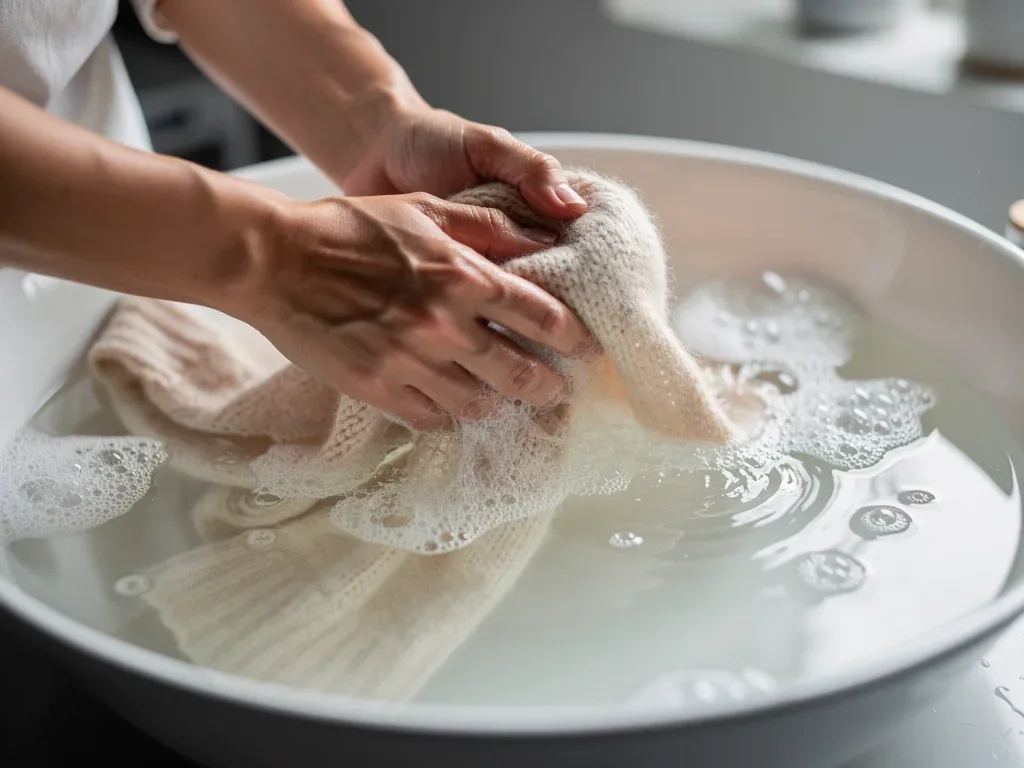
For garments labeled for hand washing, use clean lukewarm water and a mild neutral detergent formulated for wool or delicate fibers.
Woolmark recommends approximately 30°C water for many hand-washable wool garments, followed by gentle rinsing without rubbing, pulling or wringing.
Support the wet garment carefully because water adds weight and can stretch fine knitwear when it is lifted from one point.
Machine Washing Is Safe When the Label Allows It
Many modern wool garments are specifically manufactured to tolerate domestic machine washing without unacceptable shrinkage or felting.
Use the wool program or a gentle delicate cycle with the temperature and settings specified on the garment's care label.
Turning the item inside out or using a laundry bag can further reduce surface friction during the wash cycle.
Choose the Right Detergent
A mild neutral detergent intended for wool is generally safer than strong multipurpose products containing aggressive enzymes, bleach or high alkalinity.
Harsh chemistry can affect protein fibers and may change color, handle or structural strength even when damage is not immediately obvious.
Use only the amount recommended by the detergent manufacturer because adding extra product does not automatically improve cleaning performance.
Avoid Bleach
Woolmark advises against both chlorine and oxygen bleach on wool because these products can damage the protein structure of the fiber.
For stains, use a treatment explicitly suitable for wool and test cautiously when the garment manufacturer recommends spot treatment.
Aggressive scrubbing is especially risky because friction can cause felting or permanently alter the surface of fine knitwear.
Step 2: Dry Without Distorting the Garment
Wet wool and cashmere can become heavy, so careless drying can stretch shoulders, hems or sleeves even when the washing itself was gentle.
For knitwear, flat drying is usually the safest approach because the garment's full weight remains supported during evaporation.
Reshape the piece while damp and allow it to dry away from intense direct heat or prolonged strong sunlight.
Remove Excess Water Without Wringing
After hand washing, gently press out water rather than twisting the garment, which can distort stitches and stress wet fibers.
A clean towel can absorb additional moisture by supporting the garment while light pressure removes water without aggressive movement.
The goal is not to force the piece dry immediately but to shorten drying time while preserving its original dimensions.
Not Every Wool Garment Is Forbidden From a Dryer
The common rule that wool must never enter a tumble dryer is too broad because some modern garments are specifically approved for machine drying.
If the label shows a permitted mild tumble-dry process, follow the indicated low-temperature and short-duration settings carefully.
If the label says do not tumble dry, treat that instruction as mandatory because heat and mechanical action can cause severe shrinkage.
Keep Knitwear Away From Direct Heat
Radiators, heaters and very hot surfaces can dry wool unevenly and expose fibers to temperatures much higher than necessary.
Room-temperature drying provides a slower, more controlled process that is less likely to distort the shape or finish of the piece.
Strong sunlight can also contribute to fading, so shaded drying is preferable for many dyed garments.
Reshape Before the Garment Is Fully Dry
Lay sleeves, side seams and hems into their intended position while the material is still damp and flexible.
This is particularly helpful for lightweight cashmere sweaters that may temporarily lose their normal dimensions after washing.
Avoid stretching deliberately; the objective is to restore the natural shape rather than force the piece into a larger size.
Step 3: Store Wool and Cashmere Correctly
Long-term storage should protect natural fibers from insects, moisture, dust and unnecessary mechanical strain during months when garments are not being worn.
Always put pieces away clean because food residue, body oils and other organic contamination can make stored clothing more attractive to textile pests.
Garments should also be completely dry before storage because trapped moisture can encourage odors, mildew and other deterioration.
Fold Knits Rather Than Hanging Them
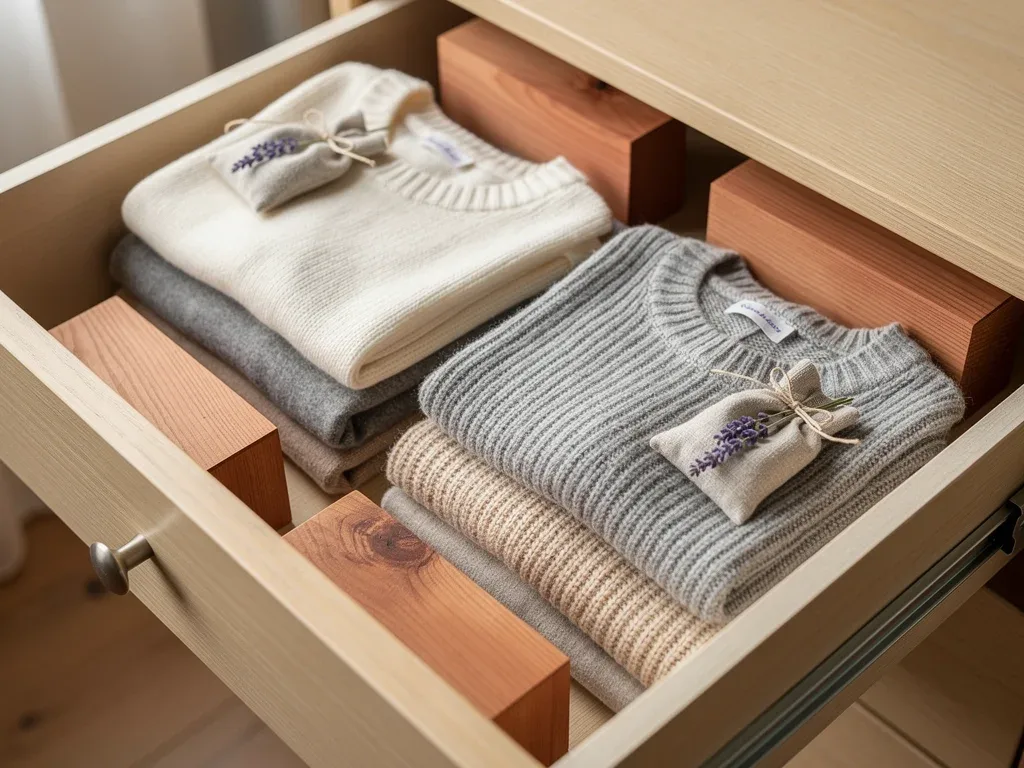
Sweaters and other knitted wool or cashmere pieces are generally best folded because hanging can stretch shoulders and change the garment's shape.
Use clean drawers, boxes or suitable fabric bags that keep the item protected without crushing delicate surfaces excessively.
Heavy knitwear benefits especially from folding because its own weight can create substantial distortion during long periods on a hanger.
Woven Wool Garments May Be Hung
Structured jackets, suits and other woven wool garments can often be stored on shaped or padded hangers that support the shoulders properly.
Woolmark specifically distinguishes woven pieces from knitwear, recommending appropriate hangers for the former and folding for knitted garments.
This distinction is more accurate than applying one universal “never hang wool” rule to every garment type.
Choose Storage Containers Carefully
Breathable cotton storage bags can work well for delicate garments because they provide physical protection without completely trapping moisture.
Airtight containers may also be useful for seasonal storage when garments enter completely clean and dry and the environment remains controlled.
Vacuum compression is less suitable for delicate knitwear because strong compression can distort fibers and trap moisture if the garment was not fully dry.
Avoid Leaving Clothes in Dry-Cleaning Plastic
Thin plastic bags supplied by dry cleaners are intended primarily for temporary transport rather than long-term textile conservation.
They can trap humidity and limit airflow, particularly when garments enter storage before residual moisture has fully dissipated.
Transfer clean garments into a more suitable storage method once they return home and are ready for seasonal storage.
Protect Wool and Cashmere From Clothes Moths
Clothes moth larvae, rather than adult moths themselves, are responsible for the characteristic holes found in vulnerable animal-fiber garments.
Cleaning pieces before storage and regularly inspecting dark, undisturbed wardrobe areas are among the most practical prevention measures.
Vacuuming shelves, corners and carpet edges can also remove lint and biological material that may support an infestation.
Cedar Can Help, but It Is Not a Guarantee
Cedar products are commonly used as a lower-odor alternative to traditional mothballs and can contribute to a pest-prevention strategy.
Their effectiveness should not replace cleaning, inspection and appropriate storage because scent alone does not make a garment permanently moth-proof.
Keep cedar products from damaging or staining delicate garments by following the storage-product manufacturer's instructions.
Lavender Should Not Be Treated as Proven Protection
Lavender sachets provide a pleasant scent, but they should not be presented as a guaranteed control method for an active clothes-moth infestation.
If larvae, webbing or repeated holes appear, isolate affected garments and address the infestation using appropriate pest-control methods.
Preventive cleanliness and inspection are more reliable foundations than relying solely on aromatic materials inside a wardrobe.
Step 4: Manage Pilling Carefully
Pilling occurs when loose surface fibers become tangled through friction, producing small balls on areas exposed to repeated rubbing.
It can appear even on high-quality wool or cashmere and does not automatically indicate that the garment is defective or low grade.
How quickly it develops depends on fiber length, yarn construction, garment design and the amount of friction experienced during use.
Use a Cashmere Comb or Fabric Shaver Gently
A cashmere comb or quality fabric shaver can remove surface pills when used lightly on a garment laid flat and supported.
Avoid repeatedly scraping the same location because excessive removal can gradually thin the fabric rather than simply improve its appearance.
Work slowly and stop as soon as the loose pills have been removed instead of attempting to create an unnaturally smooth surface.
A Razor Blade Carries More Risk
Using an ordinary razor can accidentally cut yarns or create small holes, particularly on very fine cashmere and lightweight knitted fabrics.
A purpose-designed fabric tool provides better control and is generally safer for routine garment maintenance.
For an expensive or unusually delicate piece, professional cleaning or knitwear repair can be preferable to experimenting with sharp household tools.
Repair Small Damage Before It Grows
A pulled thread, loose seam or tiny moth hole can expand when the garment continues to be worn without intervention.
Early repair often requires less reconstruction and can remain far less visible than a repair attempted after substantial unraveling.
Inspect garments occasionally, particularly around cuffs, elbows, underarms and other locations exposed to regular movement and friction.
Darning Can Extend Wearable Life
Darning rebuilds damaged textile structure with new thread and can be highly effective for small holes in wool knitwear.
Matching yarn, stitch size and tension determines whether the repair remains discreet and moves naturally with the surrounding fabric.
Professional invisible-mending or knitwear-repair services are worthwhile when a garment has significant monetary or sentimental value.
Step 5: Let Garments Rest Between Wears
Wool fibers have natural resilience, and allowing a garment to rest can help creases and temporary distortions relax between uses.
Woolmark recommends approximately 24 hours of rest before wearing the same wool garment again when practical.
This simple habit also creates time for moisture and odors from normal wear to dissipate before the garment returns to storage.
Air Garments Before Putting Them Away
A wool sweater that does not require washing may simply benefit from being laid flat or aired briefly after use.
This can remove temporary odors and moisture without exposing the fibers to another unnecessary laundering cycle.
Make sure the garment is fully dry before returning it to an enclosed wardrobe or long-term storage container.
Rotation Reduces Concentrated Wear
Alternating between several sweaters distributes friction and mechanical stress instead of repeatedly wearing the same piece day after day.
Areas such as elbows, cuffs and underarms experience less concentrated wear when garments are allowed periodic breaks.
Rotation does not magically regenerate damaged fibers, but it can slow the accumulation of everyday wear on favorite items.
Seasonal Rotation Can Simplify Maintenance
At the end of a season, inspect each garment before deciding whether it needs washing, repair or professional cleaning.
Cleaning and repairing before storage prevents stains and minor damage from remaining unnoticed for several months.
Documenting which pieces need attention can make the next season easier and prevent damaged items from returning directly into regular use.
Heat and Agitation Can Cause Felting
Wool fibers have microscopic surface scales that can interlock when exposed to the wrong combination of moisture, heat and mechanical action.
Once significant felting occurs, the resulting shrinkage and dense texture are usually difficult or impossible to reverse completely.
This is why gentle cycles and correct temperature matter more than assuming that water alone damages natural wool fibers.
Machine-Washable Wool Is Different
Some wool garments receive treatments or are engineered specifically to improve shrink resistance and dimensional stability during domestic laundering.
These products can safely tolerate machine washing when their care label confirms the appropriate wool cycle and temperature.
The existence of machine-washable wool is another reason garment-specific instructions should override blanket rules found online.
Cashmere Softness Does Not Come From Lanolin Preservation
The original article suggested choosing detergent to preserve natural lanolin, but this oversimplifies why a finished cashmere garment remains soft.
Commercial textile processing removes much of the raw fiber's natural grease during scouring, spinning and finishing before the garment reaches consumers.
The practical goal of a mild detergent is therefore protecting fiber structure, dyes and finish rather than preserving a large reservoir of original lanolin.
A Mild Neutral Detergent Is Still Important
A neutral detergent reduces unnecessary chemical stress on animal protein fibers while still removing normal soil and body residue effectively.
Products designed for wool also avoid ingredients that may be unsuitable for delicate protein-based fibers and their finishes.
Always follow both the garment label and detergent instructions because excessive product concentration can create its own cleaning problems.
Dry Cleaning Is Sometimes the Correct Choice
Hand washing is not universally superior to professional dry cleaning because some garments contain structures or finishes that should not be wet cleaned.
Tailored wool coats, lined jackets and garments marked “Dry Clean Only” should be treated according to the manufacturer's instructions.
The best care method is the one appropriate for the complete garment, not simply the fiber name listed on its composition label.
Choose a Cleaner Experienced With Delicate Garments
A professional familiar with wool, cashmere and structured garments can evaluate stains and construction before selecting a cleaning process.
Point out specific stains, repairs or fragile areas rather than assuming the cleaner will identify every issue without background information.
A good cleaner should also return garments fully dry and appropriately shaped before they go back into seasonal storage.
There Is No Universal “Every 3–5 Wears” Rule
How often a garment needs cleaning depends on what it is, where it is worn and whether it directly contacts the skin.
A cashmere sweater layered over another garment may need less frequent washing than a lightweight knit worn directly against the body.
Visible soil, odor, stains and manufacturer guidance are more useful indicators than one fixed number of wears for every item.
Overwashing Can Accelerate Wear
Every cleaning cycle exposes a garment to water, detergent and mechanical handling even when the process is very gentle.
Airing and spot treatment can sometimes address minor issues while delaying a full wash that the garment does not yet require.
This approach reduces unnecessary processing without allowing stains or body oils to remain indefinitely on fibers.
Five Steps That Actually Support Longer Garment Life
The most useful care plan combines appropriate cleaning, shape-preserving drying, pest-conscious storage, minor repair and sensible rotation between wears.
None of these steps can assign a guaranteed lifespan because fiber quality, construction and individual use differ greatly between garments.
Together, however, they reduce several of the most common forms of preventable damage affecting natural-fiber clothing.
Care Works Best as a System
Perfect washing cannot compensate for storing a damp sweater in a moth-infested wardrobe for an entire summer.
Likewise, careful storage cannot reverse damage caused by repeated overheating, aggressive washing or unaddressed holes during active use.
Long garment life depends on consistently reducing risk at every stage from wear and cleaning to repair and seasonal storage.
Can Good Care Really Add Ten Years?
Some high-quality wool and cashmere garments can remain wearable for decades when well constructed, moderately used and carefully maintained.
That does not establish a scientific rule that five maintenance steps add exactly ten years to every garment's useful life.
A more defensible claim is that proper care can materially extend service life and reduce premature replacement caused by avoidable damage.
Garment Quality Still Matters
Fiber length, yarn twist, knitting density, finishing and seam construction strongly influence how a piece performs before maintenance even begins.
A poorly constructed garment cannot necessarily be transformed into a decades-long investment simply through exceptionally careful washing and storage.
Care preserves existing quality; it does not replace the structural characteristics built into the garment at manufacturing.
Longer Garment Life Supports More Sustainable Consumption
Keeping clothing wearable for longer can reduce the need for replacement and distribute the environmental impact of manufacturing across more years of use.
This makes maintenance an important part of sustainable consumption in classic fashion without requiring consumers to discard functioning garments for newer versions.
Repair, careful laundering and thoughtful storage are practical sustainability behaviors because they focus directly on extending useful product life.
Buy Less, Maintain Better
High-quality wool and cashmere often make the most economic sense when owners intend to wear and maintain the garments repeatedly over many seasons.
A smaller collection of well-used pieces can provide better long-term value than frequently replacing garments because of preventable maintenance damage.
This approach also aligns naturally with building a classic capsule wardrobe around durable, versatile clothing.
Care Step | Why It Matters |
|---|---|
1. Appropriate Cleaning | Reduces unnecessary friction, felting and chemical damage while removing harmful soil. |
2. Correct Drying | Helps prevent stretching, distortion, shrinkage and heat-related damage. |
3. Proper Storage | Limits moth exposure, moisture, dust and long-term deformation. |
4. Pilling and Repair | Keeps minor wear from becoming larger holes or permanent structural damage. |
5. Rotation and Rest | Distributes wear and gives resilient fibers time to recover between uses. |
Frequently Asked Questions About Wool and Cashmere Care
How often should wool and cashmere be washed?
There is no universal schedule. Wash when soiled or necessary according to the garment label, and air garments between wears when appropriate.
Should wool always be washed in cold water?
No. Some labels permit gentle washing around 30°C or 40°C. Follow the exact temperature and process stated on the garment.
Can wool ever go in a tumble dryer?
Yes, but only when the care label explicitly permits a mild tumble-dry process. Otherwise, flat drying is safer for most knitwear.
Should cashmere sweaters be hung?
Usually not for long-term storage. Fine knits are generally better folded because hanging can stretch the shoulders and body.
Does pilling mean cashmere is poor quality?
No. Pilling results from surface fiber friction and can occur in both premium and lower-quality garments.
Can cedar prevent clothes moths completely?
No. Cedar can be part of prevention, but clean storage, inspection and proper pest management remain more important.
Is lavender proven to stop moth damage?
It should not be relied upon as the sole method. Lavender provides fragrance but does not replace proper infestation control.
Should wool always be hand washed?
No. Many garments are machine washable, while some require hand washing or professional dry cleaning according to their labels.
Can good care really make cashmere last decades?
Yes, some well-made garments can remain wearable for decades, but care cannot guarantee a specific lifespan for every piece.
What is the most important rule for preserving wool and cashmere?
Follow the garment's care label first, then minimize unnecessary heat, friction, moisture, pests and mechanical stress throughout its life.
Conclusion
Preserving wool and cashmere is less about rigid rules and more about matching cleaning, drying and storage to the specific garment.
Gentle maintenance, timely repairs, pest prevention and sensible rotation can materially extend wearable life without promising an arbitrary additional ten years.
Good care protects both the financial value and environmental value of quality garments by helping them remain useful across many seasons.