Build a 10-Piece Transitional Capsule Wardrobe: 40% Less Styling Time by 2026
Advertisements

How to build a 10-piece transitional capsule wardrobe is less about following a strict fashion formula and more about creating a small group of versatile pieces that work together across changing weather and everyday situations.
A well-planned capsule can simplify outfit decisions, reduce unnecessary purchases, and make it easier to see what is actually available in your closet.
However, there is no reliable evidence showing that a 10-piece wardrobe automatically cuts styling time by exactly 40%, so that figure should be treated as an unsupported estimate rather than a guaranteed result.
The Rise of the Transitional Capsule Wardrobe
The transitional capsule wardrobe is a practical approach built around versatile clothing that can move between seasons without requiring a complete wardrobe change.
The idea fits within broader interest in clothing longevity, mindful purchasing, repair, reuse, and more deliberate fashion consumption.
Research published in 2026 also examined capsule wardrobe adoption as part of sustainable fashion behavior, while finding that price, habits, and consumer priorities still strongly influence what people actually buy.
Defining Your Core Style and Needs
Before choosing any garments, identify the situations your wardrobe needs to support most often.
Work requirements, climate, commuting, social activities, and personal comfort should shape the capsule more than a generic online checklist.
A capsule that reflects real routines is more likely to be worn consistently than one designed mainly around trends or aspirational outfits.
Identify the colors you wear most often.
Consider your local climate and temperature changes.
Review your typical work and social schedule.
Note which silhouettes and fabrics you actually enjoy wearing.
Selecting Versatile Foundation Pieces
The strongest foundation pieces are usually garments that work with several other items already in the capsule.
Examples may include well-fitting trousers, jeans, a classic blazer, simple tops, knitwear, or a lightweight jacket.
Neutral colors can make coordination easier, but a capsule does not need to be limited to black, beige, navy, gray, or white if other colors suit your style better.
Choose pieces that coordinate with several other items.
Prioritize fit, comfort, and realistic care requirements.
Select fabrics appropriate for your climate and routine.
Favor garments you can imagine wearing repeatedly.
Strategic Item Selection for Efficiency
A small wardrobe becomes easier to use when most pieces can be combined without extensive planning.
Instead of choosing ten individually impressive items, focus on how the collection functions as a system.
This can reduce the number of decisions required when dressing, although the amount of time saved will differ from person to person.
The 10-Piece Framework Explained
Ten pieces can be a useful starting point, but there is no research-based rule establishing ten as the ideal number for everyone.
A practical capsule might contain several tops, two or three bottoms, one or two layering pieces, and footwear chosen for the person's actual routine.
The exact balance should change depending on dress codes, climate, laundry frequency, and how much variety the wearer prefers.
Two or three versatile bottoms.
Three or four tops that work with most bottoms.
One or two layering pieces.
One or two pairs of versatile shoes if footwear is included in the count.
Incorporating Seasonal Adaptability
Transitional wardrobes work best when pieces can be layered as temperatures change.
A lightweight shirt, knit layer, cardigan, blazer, or jacket can often extend the usefulness of an outfit across cool mornings and warmer afternoons.
Rather than assuming one fabric is universally best, choose materials based on comfort, climate, maintenance needs, and how the garment will actually be used.
Maximizing Outfit Combinations
The main advantage of a capsule wardrobe is that a limited set of coordinated pieces can produce multiple outfits.
This works best when tops, bottoms, and layers share enough visual compatibility to be combined in different ways.
The goal is not to create the maximum mathematical number of outfits, but to create enough realistic combinations for everyday life.
Accessorizing for Variety
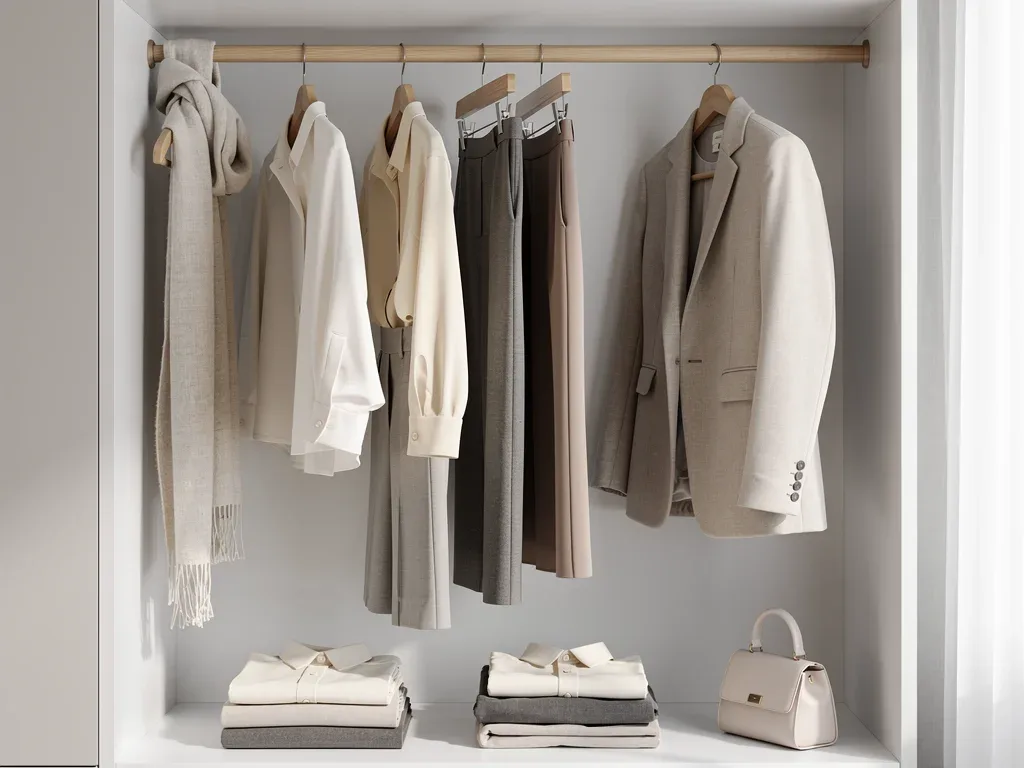
Accessories can add variation without increasing the number of core garments in the capsule.
Scarves, jewelry, belts, handbags, and other accessories can change the visual balance or formality of a familiar outfit.
They are most useful when they already fit the wearer's habits rather than being purchased only to make the capsule appear more complete.
Use accessories to introduce color or texture.
Choose pieces that work with several outfits.
Avoid buying accessories that duplicate items you rarely wear.
The Role of Outerwear and Footwear
Outerwear and shoes often have a major influence on whether a capsule works across seasons and occasions.
A lightweight coat, denim jacket, blazer, sneakers, flats, or ankle boots can each serve different needs depending on climate and lifestyle.
There is no universal set of essentials, so these pieces should be chosen according to comfort, weather, dress requirements, and walking habits.
Build the Capsule Around Real Outfit Formulas
One way to make a small wardrobe easier to use is to create repeatable outfit formulas.
An outfit formula might be as simple as trousers plus a T-shirt plus a blazer, with shoes adjusted according to the occasion.
These formulas reduce the need to invent a completely new look each morning while still allowing variation through color, layering, and accessories.
Create Five Reliable Combinations First
Before adding more clothes, identify at least five combinations you would realistically wear.
Photographing those outfits can create a quick visual reference for rushed mornings or travel.
If a garment does not fit naturally into several useful combinations, reconsider whether it deserves one of the limited capsule slots.
Maintenance and Longevity of Your Wardrobe
Garment longevity depends on construction, fabric, frequency of wear, laundering, storage, repair, and other factors.
Research on sustainable clothing use emphasizes wearing garments longer, caring for them appropriately, and repairing them when practical.
There is no reliable evidence that simply placing clothes in a capsule makes them last 50% longer, so longevity should be linked to actual care and use practices rather than wardrobe size alone.
Curating and Refreshing Your 10 Pieces
A capsule does not need to remain unchanged indefinitely.
Periodically review what you wear, what no longer fits, and what fails to meet current work, climate, or lifestyle needs.
Replace items because there is a real functional gap or because something is worn out, rather than automatically refreshing the capsule every season.
Review the capsule when your routine or climate changes.
Repair garments when practical.
Replace items that no longer serve their intended purpose.
Avoid arbitrary seasonal purchases when no gap exists.
Sustainable Practices in Wardrobe Management
Buying fewer garments can support lower-consumption habits when those garments are worn frequently and kept for longer periods.
Repairing, rewearing, buying secondhand, and choosing durable items are among several behaviors associated with more sustainable clothing use.
A capsule wardrobe can support those behaviors, but sustainability depends on the full pattern of purchasing, care, use, and disposal rather than on the capsule label itself.
Impact on Daily Life and Decision-Making
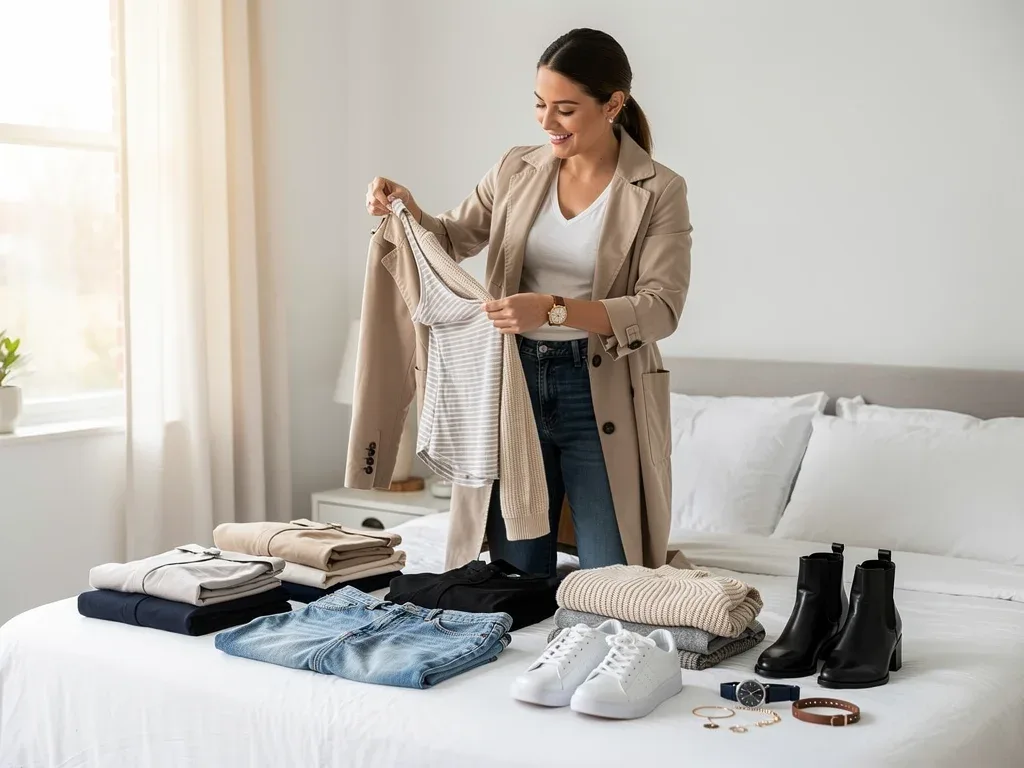
A smaller, coordinated wardrobe can make daily outfit selection feel simpler because fewer incompatible options need to be considered.
Some people may experience less frustration or decision-making effort when their most frequently worn items are visible and easy to combine.
However, there is no established evidence that capsule wardrobes produce a universal 40% reduction in dressing or styling time.
Time Savings and Mental Clarity
Time savings are more likely to come from preparation and organization than from the exact number of garments owned.
Preplanned outfits, visible clothing, coordinated colors, and reliable outfit formulas can all make mornings more efficient.
People who enjoy frequent experimentation may prefer a larger wardrobe, so efficiency should not be confused with a single correct approach to personal style.
Keep frequently used garments easy to see.
Save photos of reliable outfit combinations.
Prepare outfits in advance when mornings are busy.
Remove items that consistently create fit or styling problems.
Financial and Environmental Considerations
A capsule wardrobe can reduce clothing spending if it genuinely results in fewer unnecessary purchases.
It is not automatically cheaper if the wearer repeatedly replaces garments, buys expensive pieces that go unused, or treats the capsule as another shopping trend.
From an environmental perspective, extending garment use and reducing unnecessary consumption are generally more meaningful than simply owning a predetermined number of pieces.
What U.S. Textile Waste Data Actually Show
The U.S. Environmental Protection Agency identifies discarded clothing as one of the main sources of textile material in municipal solid waste.
EPA estimated that approximately 17 million tons of textiles were generated in the United States in 2018, with about 11.3 million tons landfilled.
These figures provide useful historical context, but they should be identified as 2018 estimates rather than described as current 2026 waste totals.
Why Wearing Clothes Longer Matters
Research on clothing consumption increasingly focuses on what happens after garments are purchased, including wear, care, repair, and disposal.
Keeping useful garments in service longer can reduce the frequency with which replacement clothing needs to be purchased.
A capsule can support this approach when it encourages regular use, but simply owning fewer items does not automatically guarantee lower environmental impact.
A 10-Piece Example for a Transitional Wardrobe
A sample capsule can make the concept easier to understand, but it should be treated as an example rather than a universal shopping list.
The following structure favors simple layering and compatibility across casual and moderately polished situations.
Anyone adapting it should substitute pieces according to climate, occupation, body comfort, and personal style.
Sample Core Pieces
One possible capsule might contain three tops, three bottoms, two layering pieces, and two pairs of shoes.
Another person might prefer a dress, skirt, heavier coat, or additional knitwear instead of some of those items.
The important test is whether the pieces work together and are genuinely useful in the wearer's normal routine.
One neutral T-shirt.
One button-front shirt or blouse.
One lightweight knit top.
One pair of jeans.
One pair of versatile trousers.
One skirt or alternative bottom.
One blazer or structured layer.
One light jacket or cardigan.
One casual pair of shoes.
One dressier or weather-appropriate pair of shoes.
How to Know Whether Your Capsule Is Working
A useful capsule should make it easier to get dressed without making the wearer feel unnecessarily restricted.
Track which items are repeatedly chosen and which remain untouched over several weeks.
That information is more useful than following an arbitrary rule about how many times every item must be worn.
Review Function Before Buying More
If the capsule feels incomplete, identify the exact situation that is difficult to dress for before purchasing anything.
A missing warm layer, appropriate work shoe, or weather-resistant piece is a clearer reason to buy than a vague desire for more variety.
This gap-based approach can reduce duplicate purchases and help the wardrobe remain focused on real needs.
Key Aspect | Practical Approach |
|---|---|
Styling Time | A coordinated capsule may simplify dressing, but no verified 40% reduction is established. |
Core Principle | Choose versatile pieces that work together and fit real lifestyle needs. |
Longevity | Wear, care, repair, and appropriate storage influence how long garments last. |
Sustainability | Fewer unnecessary purchases and longer garment use can support lower-consumption habits. |
Frequently Asked Questions About Transitional Capsule Wardrobes
What exactly is a transitional capsule wardrobe? ▼
It is a small, coordinated selection of clothing designed to work across changing weather or seasons through layering, versatility, and repeated combinations.
Does a 10-piece capsule cut styling time by 40%? ▼
There is no reliable evidence establishing a universal 40% reduction. A coordinated wardrobe may make dressing faster, but the result varies by person and routine.
Does a capsule wardrobe have to contain exactly 10 pieces? ▼
No. Ten pieces can be a useful exercise or starting framework, but the ideal number depends on lifestyle, climate, laundry habits, and personal preference.
What should be included in the 10 pieces? ▼
A practical mix can include tops, bottoms, layering pieces, and shoes, but the exact combination should reflect the situations you actually dress for.
Are accessories counted in the 10-piece limit? ▼
They do not have to be. Many capsule approaches treat accessories as separate from the core garment count.
Is a transitional capsule wardrobe suitable for every climate? ▼
The principle can be adapted broadly, but extreme heat, cold, rain, snow, or specialized work requirements may require additional seasonal or technical clothing.
Looking Ahead
The transitional capsule wardrobe remains a useful personal-style framework for people who prefer a smaller and more coordinated closet.
Current research supports broader interest in clothing longevity and sustainable consumption, but it does not establish a universal ten-piece standard or a guaranteed 40% reduction in styling time.
The strongest approach in 2026 is therefore practical rather than prescriptive: choose clothing that fits your life, wear it often, care for it well, and add new pieces only when they solve a genuine wardrobe need.