Authentic Luxury Perfumes: 7 Red Flags to Avoid Counterfeits
Advertisements
To identify authentic luxury perfumes in the US market, scrutinize packaging, bottle quality, scent profile, batch codes, and purchase from authorized retailers, as these are key indicators to avoid counterfeit products effectively.
In the vibrant and often opulent world of fragrance, the allure of luxury perfumes is undeniable. Owning a bottle of a renowned designer scent is not just about the aroma; it’s about the experience, the craftsmanship, and the statement it makes. However, the rising tide of counterfeit products, especially in the US market, poses a significant threat to consumers seeking to invest in genuine articles. Learning how to identify authentic luxury perfumes has become more crucial than ever, empowering you to protect your investment and ensure you’re getting the quality you pay for. This comprehensive guide will equip you with the knowledge to spot the subtle, and sometimes not-so-subtle, red flags that distinguish a genuine masterpiece from a deceptive imitation.
Advertisements
The deceptive world of counterfeit fragrances
The market for counterfeit luxury goods, including perfumes, is a multi-billion dollar industry that thrives on deception. These fake products are not just an economic concern; they can also pose significant health risks. Counterfeit perfumes often contain cheap, unregulated, and sometimes harmful ingredients, leading to skin irritations, allergic reactions, or even more severe health issues. Understanding the scope of this problem is the first step in safeguarding yourself against it.
Counterfeiters often go to great lengths to mimic the appearance of authentic products, making it increasingly difficult for the untrained eye to differentiate between a genuine item and a fake. They exploit consumer desire for luxury brands at a lower price point, often distributing through unauthorized channels such as flea markets, obscure online retailers, or social media platforms. The sophistication of these fakes varies, from outright poor imitations to remarkably close copies that require a discerning eye and specific knowledge to detect.
The impact extends beyond individual consumers. Luxury brands invest heavily in research, development, and marketing to create their unique olfactory experiences. Counterfeiting undermines these efforts, damages brand reputation, and ultimately stifles innovation within the legitimate fragrance industry. By learning to identify and avoid fake products, consumers play a vital role in supporting ethical commerce and protecting their own well-being.
The battle against fakes requires constant vigilance and an informed approach. The following sections will delve into specific red flags, offering practical advice and detailed observations that will help you confidently determine the authenticity of luxury perfumes.
Red flag 1: scrutinize the packaging and cellophane wrap
The first line of defense against counterfeit perfumes often lies in the packaging itself. Luxury brands pay meticulous attention to every detail, and this commitment to quality extends to the outer box and its protective cellophane. A quick, thorough inspection can reveal a lot about a perfume’s authenticity before you even open it.
Examine the cellophane tightly
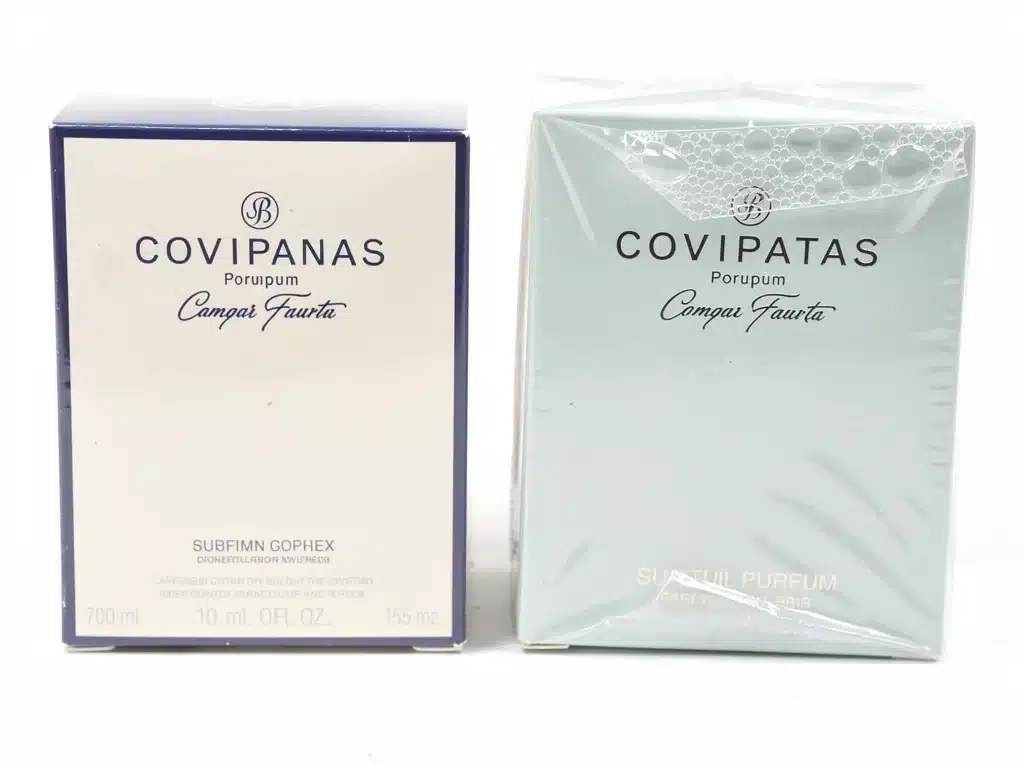
Authentic luxury perfumes are typically wrapped in cellophane that is tightly sealed, perfectly folded, and seamlessly adhered to the box. There should be no loose ends, sloppy seams, or excessive air pockets. If the cellophane appears loose, crinkled, or poorly applied, it’s a significant warning sign. Counterfeiters often lack the precision machinery to replicate this level of packaging quality, resulting in amateurish wraps.
- Look for tight, uniform folds.
- Check for clean, precise seals.
- Ensure no excess cellophane material is visible.
Inspect the box quality and printing
The box itself should feel sturdy and be made of high-quality cardboard. The printing on authentic perfume boxes is usually crisp, clear, and perfectly aligned. Pay close attention to the text, logos, and any embossed elements. Blurry images, misspellings, grammatical errors, or faded colors are strong indicators of a fake. Luxury brands use high-resolution printing techniques, so any imperfections in print quality should raise immediate suspicion.
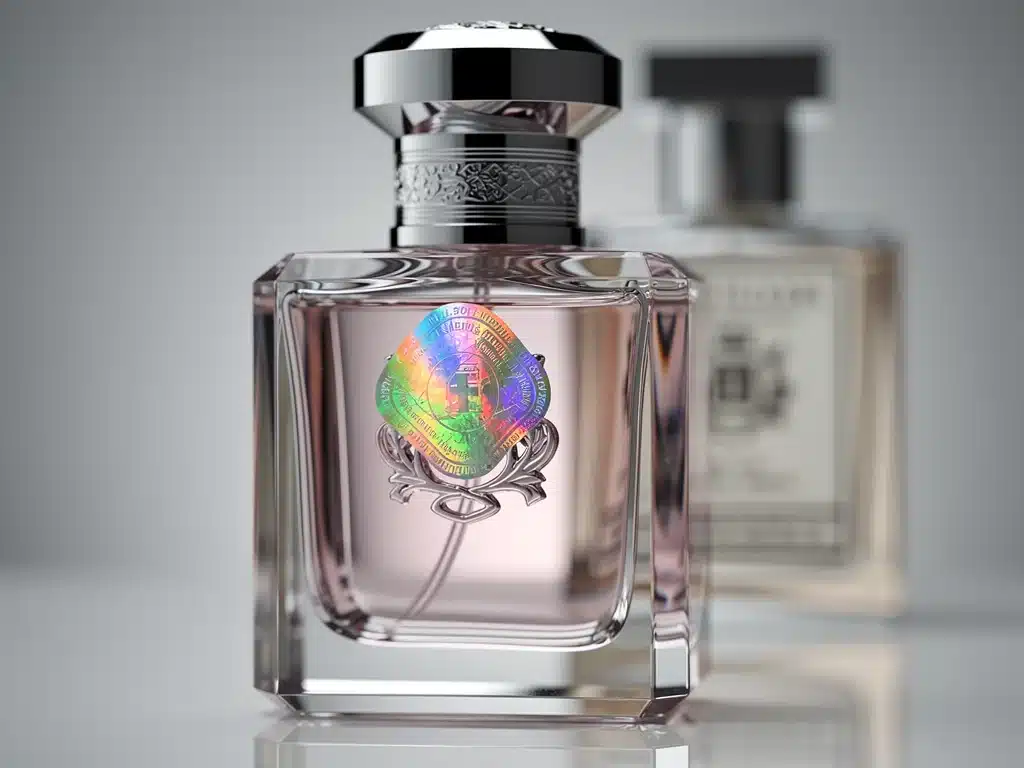
Furthermore, many luxury brands incorporate specific textures, holographic elements, or embossed patterns into their packaging as additional security measures. Familiarize yourself with these details for your desired fragrance. A genuine box will feel substantial and visually impeccable, reflecting the premium product inside. Any deviation from this standard suggests a counterfeit.
A final check on the packaging involves examining the internal cardboard insert. Authentic perfumes often come with a high-quality cardboard insert designed to secure the bottle in place during transit. This insert should fit snugly and be made of sturdy material. Fakes might have flimsy, ill-fitting inserts or none at all, indicating a lack of attention to detail and protection.
Red flag 2: assess the bottle and cap craftsmanship
Once past the outer packaging, the perfume bottle itself offers a wealth of clues regarding its authenticity. Luxury brands consider the bottle an integral part of the fragrance experience, often designing them as works of art.
Glass quality and clarity
Authentic luxury perfume bottles are crafted from high-quality glass that is smooth, clear, and free from imperfections like bubbles, streaks, or uneven thickness. The bottom of the bottle should also be thick and smooth, often with engraved details rather than mere stickers. Counterfeit bottles frequently use cheaper, lower-quality glass that might feel rough, appear cloudy, or have visible flaws. The weight of the bottle can also be an indicator; genuine bottles often feel substantial and well-balanced in hand.
The precision of the bottle’s design is another critical factor. Edges should be clean, and any decorative elements should be perfectly formed and aligned. If the bottle feels flimsy, looks asymmetrical, or has poorly finished edges, it’s a strong sign of a fake. The overall aesthetic should exude luxury and meticulous attention to detail.
Cap fit and sprayer mechanism
The cap of an authentic luxury perfume bottle should fit perfectly and securely, often with a satisfying click or magnetic closure. It should be symmetrical and well-made, consistent with the overall quality of the bottle. If the cap feels loose, wobbly, or cheap, or if it doesn’t align correctly with the bottle, it’s a red flag. Counterfeiters often overlook these small but significant details.
The sprayer mechanism is another area to examine. A genuine sprayer should produce a fine, even mist with a smooth, consistent pump. If the sprayer feels stiff, clogs easily, or produces an uneven stream, it’s a sign of poor manufacturing, commonly found in fakes. The tube inside the bottle, extending from the sprayer to the bottom, should be nearly invisible or very thin, reaching straight to the base without being bent or noticeably too long or too short.
These elements of bottle and cap craftsmanship are often difficult for counterfeiters to replicate perfectly without incurring significant costs, making them reliable indicators of authenticity. A genuine luxury perfume bottle is a testament to quality from top to bottom.
Red flag 3: analyze the scent profile and longevity
While packaging and bottle details provide visual cues, the fragrance itself is arguably the most critical aspect of a perfume’s authenticity. A genuine luxury perfume boasts a complex, multi-layered scent profile, a stark contrast to the often flat and fleeting aroma of a counterfeit.
The fragrance journey: top, middle, and base notes
Authentic perfumes are meticulously crafted with a distinct olfactive pyramid: top, middle (heart), and base notes. Top notes are the initial impression, fading within minutes. Middle notes emerge next, forming the core of the fragrance. Base notes are the foundation, providing depth and longevity, often lingering for hours. A genuine fragrance will evolve beautifully through these stages, offering a rich and nuanced experience. Counterfeits typically lack this complexity, often presenting only a weak approximation of the top notes that quickly dissipates or turns unpleasant.
- Observe the initial impression (top notes).
- Assess the development of the scent (middle notes).
- Note the lingering aroma and its persistence (base notes).
Longevity and consistency
Luxury perfumes are designed to last, often providing several hours of wear, depending on the concentration (e.g., Eau de Parfum vs. Eau de Toilette). If a perfume’s scent disappears rapidly after application, or if the aroma changes dramatically and negatively, it’s a strong indicator of a fake. Counterfeiters use cheaper, highly volatile ingredients that evaporate quickly, failing to replicate the sophisticated formulations of authentic fragrances.
Furthermore, the scent of an authentic perfume should be consistent from one bottle to another of the same product. While slight variations can occur due to natural ingredients or batch differences, a significant deviation in smell or quality suggests a counterfeit. Trust your nose; if the scent seems ‘off,’ too alcoholic, or simply not what you expect from the brand, exercise caution. A genuine scent is a carefully balanced composition, not a crude mixture.
Red flag 4: verify batch codes and serial numbers
Batch codes and serial numbers are crucial identifiers that can help confirm the authenticity of a luxury perfume. These codes act as a fingerprint for each product, allowing brands to track manufacturing details and distribution.
Locating and interpreting batch codes
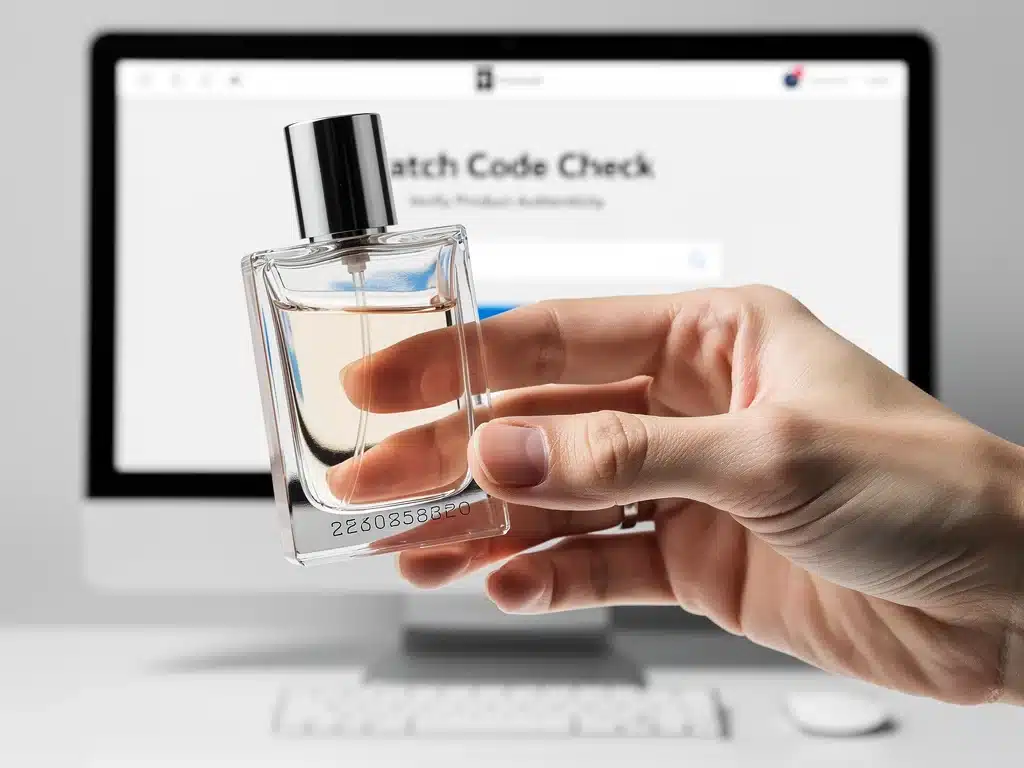
Every authentic luxury perfume bottle and its corresponding box will have a unique batch code. This code is typically a series of numbers and letters, often engraved, debossed, or printed on the bottom of the bottle and the bottom of the box. It is essential that the batch code on the bottle perfectly matches the batch code on the box. Discrepancies here are a definitive sign of a counterfeit.
Once you locate the batch code, you can use online batch code checkers (often found on reputable beauty websites or forums) to verify its existence and production date. While these checkers aren’t foolproof, a non-existent or invalid batch code is a major red flag. Keep in mind that some brands have their own internal verification systems, so direct contact with the brand’s customer service might be necessary for ultimate confirmation.
The importance of matching codes
The consistency between the batch code on the bottle and the box is paramount. Counterfeiters often fail to ensure these codes match, or they might reuse generic codes across many fake products. A genuine product maintains this consistency as part of its quality control and traceability. If the codes don’t align, or if one is missing entirely, it’s highly likely you’re dealing with a fake.
Additionally, pay attention to the method of application of the batch code. Authentic brands often etch or laser-engrave these codes directly into the glass or print them seamlessly onto the label. If the code appears to be a flimsy sticker, easily removable, or poorly printed, it raises a red flag. This attention to detail in the application of the batch code is another hallmark of genuine luxury production.
Red flag 5: examine the liquid color and clarity
The liquid inside a luxury perfume bottle is not just about scent; its appearance can also offer vital clues about its authenticity. Genuine perfumes are carefully formulated, and their liquid color and clarity are consistent and precise.
Expected color and transparency
Authentic luxury perfumes usually have a specific, consistent color that aligns with the brand’s official product images. This color should be clear and free from any sediment, cloudiness, or floating particles. If the liquid appears unusually dark, too light, or has a murky appearance, it’s a strong indicator of a counterfeit. Counterfeiters often use artificial dyes or impure ingredients, leading to inconsistent or unnatural liquid colors.
It’s also important to note that while some natural ingredients can cause slight variations in color over time, a brand new bottle should exhibit pristine clarity. Any visible impurities immediately suggest a fake product. The liquid should look clean, bright, and exactly as pictured in official product representations.
Absence of sediment or discoloration
A genuine luxury perfume will not contain any sediment at the bottom of the bottle or floating particles within the liquid. The formulation process for authentic fragrances is highly controlled to prevent such impurities. If you observe any foreign matter or discoloration that deviates from what is expected, it is a significant red flag. This could indicate poor manufacturing practices, substandard ingredients, or contamination, all common in counterfeit products.
Furthermore, avoid perfumes where the liquid level appears unusually low or high, or if there are signs of tampering with the sprayer or bottle seal. While not directly related to liquid color, these are often associated with products that have been refilled or are not factory-sealed originals. The liquid in an authentic bottle should be uniform in color, perfectly clear, and fill the bottle to the expected level, reflecting the brand’s commitment to quality from every angle.
Red flag 6: consider the purchase location and price
Where and at what price you purchase a luxury perfume can be as telling as the product’s physical characteristics. The allure of a bargain often leads consumers into the trap of counterfeit goods.
Authorized retailers vs. suspicious sources
The safest way to ensure you are buying an authentic luxury perfume is to purchase it from authorized retailers. This includes reputable department stores (like Macy’s, Nordstrom, Sephora, Ulta in the US), official brand boutiques, or the brand’s official website. These channels guarantee authenticity because they source directly from the manufacturers.
- Buy only from reputable department stores.
- Check official brand websites or boutiques.
- Avoid unknown online sellers or street vendors.
Conversely, be extremely wary of perfumes sold at significantly discounted prices from unauthorized sources such as flea markets, street vendors, unverified online marketplaces (e.g., certain third-party sellers on Amazon or eBay without proper accreditation), or social media groups. While some legitimate discounts exist, a price that seems too good to be true almost always is when it comes to luxury goods. Counterfeiters often use deeply cut prices to entice unsuspecting buyers.
Unrealistic pricing and dramatic discounts
Luxury perfumes carry a premium price tag for a reason: the quality of ingredients, the intricate formulation, the sophisticated packaging, and the brand’s prestige. If you encounter a luxury perfume being sold at a drastically reduced price—say, 50% or more below its typical retail value—it should immediately raise a red flag. Genuine luxury brands rarely offer such steep discounts, especially on their popular or newly released fragrances.
While sales and promotions do occur, they are usually within a reasonable range and offered by authorized retailers. Any offer that seems implausibly cheap is a strong indicator that the product is likely a counterfeit. Remember, the cost of manufacturing a high-quality fake can be low, allowing counterfeiters to offer attractive prices while still making a significant profit. Prioritizing a good deal over guaranteed authenticity is a common pitfall for many, and understanding this financial red flag is crucial in avoiding fakes.
Red flag 7: trust your instincts and research the brand
Beyond specific physical attributes, developing a keen sense of intuition and conducting thorough research on the brand can significantly aid in distinguishing authentic luxury perfumes from counterfeits. This involves a holistic approach to your purchase.
Familiarize yourself with brand specifics
Before making a purchase, take the time to research the specific luxury perfume you intend to buy. Visit the brand’s official website to view high-resolution images of the product, including its packaging, bottle design, and any unique features. Pay attention to the font used, the exact placement of logos, and the spelling of the brand name and fragrance name. Counterfeiters often make subtle errors in these details that can be missed if you’re not intimately familiar with the genuine product.
Understanding the typical retail price range for the fragrance you want is also vital. This knowledge empowers you to recognize when a deal is truly exceptional versus when it’s suspiciously low. Furthermore, read reviews from trusted beauty bloggers or fragrance enthusiasts who often share detailed insights into packaging and scent nuances that can help you cross-reference your observations.
If it feels off, it probably is
Ultimately, if something about the purchase experience or the product itself feels ‘off’ to you, trust your instincts. This could be anything from a seller’s evasiveness about the product’s origin to a subtle discrepancy in the packaging that you can’t quite pinpoint. The overall impression of a genuine luxury item is one of impeccable quality and attention to detail. If any element falls short of this expectation, it’s worth pausing and investigating further.
Don’t hesitate to ask sellers for more information about their sourcing or to provide additional photos if you’re buying online. A reputable seller will be transparent and willing to provide reassurance. If they are hesitant or defensive, it’s a major red flag. Your peace of mind and the assurance of authenticity are worth the extra effort. Remember, purchasing a luxury perfume should be an experience of delight, not doubt.
| Key Authenticity Check | Brief Description of Red Flag |
|---|---|
| Packaging & Cellophane | Loose wrap, blurry printing, misspellings, flimsy box. |
| Bottle & Cap | Cheap glass, imperfections, loose or ill-fitting cap, poor sprayer. |
| Scent Profile | Flat, short-lasting, overly alcoholic, or unpleasant aroma. |
| Purchase Source & Price | Unauthorized sellers, suspiciously low prices, lack of transparency. |
Frequently asked questions about authentic luxury perfumes
Immediate red flags include loose or poorly sealed cellophane, blurry printing or misspellings on the box, a cheap-feeling bottle or cap, and an unusually low price from an unauthorized seller. These visible cues often betray a fake before you even open the product.
No, an authentic luxury perfume will always have matching batch codes on both the bottle and the box. Discrepancies between these codes are a definitive sign of a counterfeit, indicating a lack of proper manufacturing and quality control.
Online batch code checkers can be a helpful guide, providing an estimated production date. However, they are not 100% foolproof as counterfeiters can sometimes fake these codes. For ultimate verification, comparing codes and contacting the brand directly is recommended.
Fake perfumes often contain unregulated and harmful chemicals, leading to skin irritation, allergic reactions, rashes, or even more serious health issues due to undisclosed ingredients. They lack the safety standards of authentic products, making their use potentially dangerous.
It can be risky. Only purchase from official brand websites or verified, authorized retailers on reputable marketplaces. Avoid third-party sellers without strong authentication credentials or suspiciously low prices, as these are common channels for counterfeit distribution.
Conclusion
Navigating the complex landscape of luxury fragrances requires diligence and an informed approach, especially when safeguarding against the pervasive threat of counterfeit products. By understanding and actively looking for the seven red flags discussed—from scrutinizing packaging and bottle craftsmanship to analyzing scent profiles, verifying batch codes, and being wary of suspicious purchase origins—you empower yourself to make genuine investments. Protecting your health, your finances, and the integrity of the luxury fragrance industry ultimately relies on your ability to discern authenticity. Always prioritize reputable sources and trust your judgment; if a deal seems too good to be true, it almost certainly is.