Day-to-Night Shift Dress: 2 Accessories for 24-Hour Style
Advertisements
A day-to-night shift dress can move from work hours to evening plans with only a few intentional styling changes.
The dress works well for this purpose because its clean shape creates a neutral base that responds easily to accessories.
Instead of changing the entire outfit, two carefully chosen pieces can adjust its formality, texture, and overall visual direction.
Why the Classic Shift Dress Works So Well
The shift dress is known for its simple silhouette, straight lines, and relatively relaxed fit through the waist and hips.
That simplicity allows jewelry, footwear, belts, bags, and outer layers to influence how formal or casual the outfit appears.
A versatile base also makes the dress easier to repeat across different settings without making every look feel identical.
Its Shape Creates a Neutral Foundation
Because a shift dress usually avoids complicated construction, it does not compete strongly with accessories or layered styling choices.
This gives the wearer freedom to make the outfit feel professional, minimal, relaxed, or more polished depending on the occasion.
The same garment can therefore support multiple looks while keeping the core silhouette familiar and easy to wear.
Color Also Affects Versatility
Black, navy, charcoal, cream, and other neutrals are especially flexible because they coordinate easily with different accessories and finishes.
Brighter shift dresses can also work, although the accessory palette may need to be more controlled to keep the outfit balanced.
The most useful color is ultimately one that already coordinates with the shoes, bags, jewelry, and outerwear in the wardrobe.
Choosing Two Accessories for the Transition
The strongest day-to-night transformation comes from choosing accessories that create a visible change without requiring a complete wardrobe swap.
One accessory can change the silhouette or focal point, while the other adds texture, polish, or a more evening-oriented finish.
The goal is to create contrast between the daytime and evening versions while keeping the day-to-night shift dress recognizable.
Focus on Visual Impact
An accessory with strong visual presence can change the outfit more effectively than several small pieces that barely alter the overall look.
A structured belt, statement earrings, metallic clutch, or refined shoe can immediately shift the mood of a simple dress.
Choosing only two high-impact elements also keeps the transition practical for people moving directly between work and evening plans.
Keep the Accessories Easy to Carry
Compact pieces are easier to store during the day and can be changed quickly without requiring a separate outfit bag.
Jewelry, a slim belt, clutch, scarf, or lightweight accessory can usually fit inside a larger daytime tote without much difficulty.
This practicality is central to the idea because the transition should remain simple enough to use during a busy schedule.
Daytime Styling for a Shift Dress
A daytime look generally benefits from accessories that feel polished, functional, and appropriate for longer periods of wear.
The styling can remain minimal while still adding enough structure to prevent the dress from looking unfinished or overly plain.
Comfort also matters because the outfit may need to work across commuting, meetings, errands, or other daytime activities.
Use Clean and Practical Accessories
A structured bag, simple jewelry, understated belt, or comfortable shoe can reinforce a polished daytime appearance without adding unnecessary complexity.
The exact combination depends on the environment, with professional settings often benefiting from cleaner lines and quieter finishes.
Casual settings allow more flexibility through softer materials, relaxed footwear, or accessories with slightly more texture.
Choose comfortable shoes suited to the day's activities.
Use simple jewelry that does not dominate the outfit.
Select a structured or practical daytime bag.
Keep accessories consistent with the setting and dress code.
Keep the Base Simple
A simple daytime version makes the later evening transformation more noticeable because there is room to increase contrast and polish.
Over-accessorizing too early can make it harder to create a meaningful visual change once the evening begins.
A restrained base therefore gives the two evening accessories greater impact when they are introduced later in the day.
Evening Styling With Two Accessories
Evening accessories can introduce stronger texture, reflective materials, bolder proportions, or a more defined silhouette without replacing the dress.
The best choices depend on the destination, because dinner, cocktails, theater, and formal events each call for different levels of polish.
The transformation should feel intentional rather than theatrical, allowing the same garment to adapt naturally to a new setting.
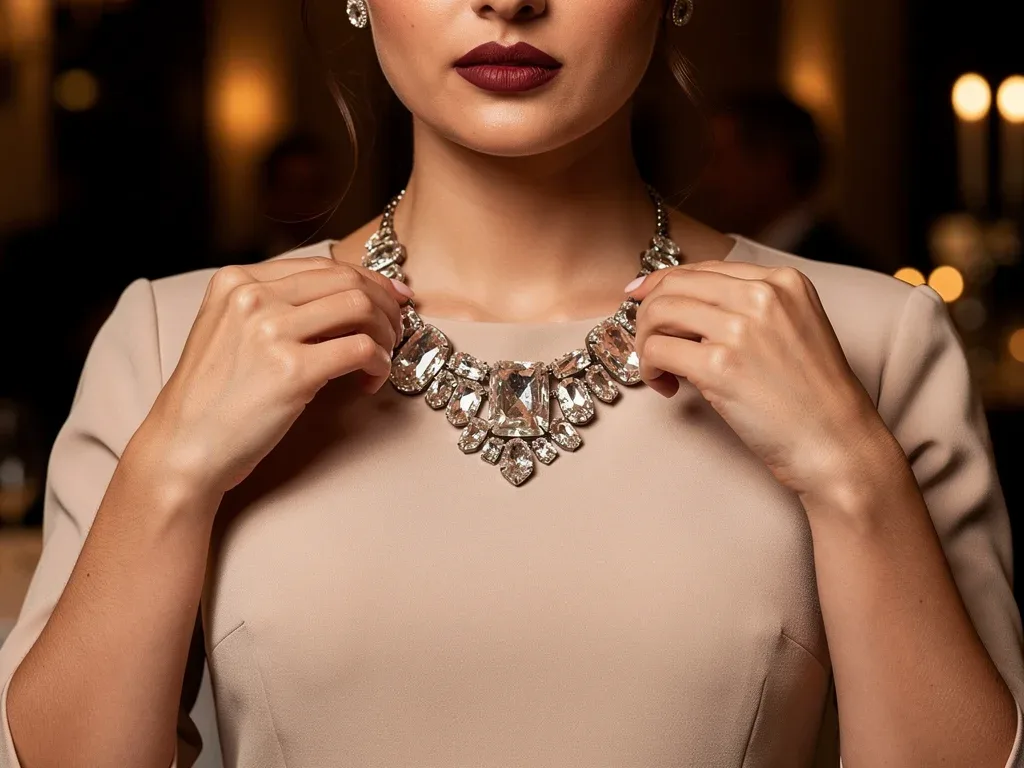
Statement Jewelry as the First Accessory
Jewelry can change the focal point of a shift dress by drawing attention toward the neckline, face, or overall upper silhouette.
A stronger necklace, earrings, or bracelet can replace subtle daytime pieces and make the outfit feel more deliberate for evening.
This jewelry strategy works especially well because it provides impact without adding bulk or requiring much storage space.
A Clutch or Belt as the Second Accessory
A clutch can immediately make the look feel more evening-oriented by replacing a practical daytime tote with a smaller structured piece.
A belt can create a different effect by defining the waist and changing the proportions of an otherwise straight shift silhouette.
Either option can work as the second accessory depending on whether the priority is changing the outfit's shape or its level of formality.
Footwear Can Change the Entire Look
Shoes strongly influence the perceived formality of a dress because they affect posture, proportion, and the visual weight of the outfit.
Flats, loafers, sneakers, block heels, boots, and dressier shoes can each make the same shift dress feel noticeably different.
If carrying a second pair is practical, footwear can become one of the two strongest accessories in the transition.
Choose Footwear Based on the Evening Plan
A refined flat or low heel may be appropriate for dinner, while a more formal event may call for something with additional structure.
Comfort should still be considered because an accessory that becomes difficult to wear can undermine the usefulness of the transition.
The strongest choice balances appearance with the amount of walking, standing, and movement expected throughout the evening.
Do Not Assume Heels Are Required
A polished evening outfit does not automatically require high heels, especially when sleek flats, boots, or loafers fit the setting better.
Material, shape, finish, and condition often influence the level of formality as much as the height of the shoe.
This creates more flexibility for building a day-to-night shift dress strategy around comfort and individual style.
Using a Belt to Change the Silhouette
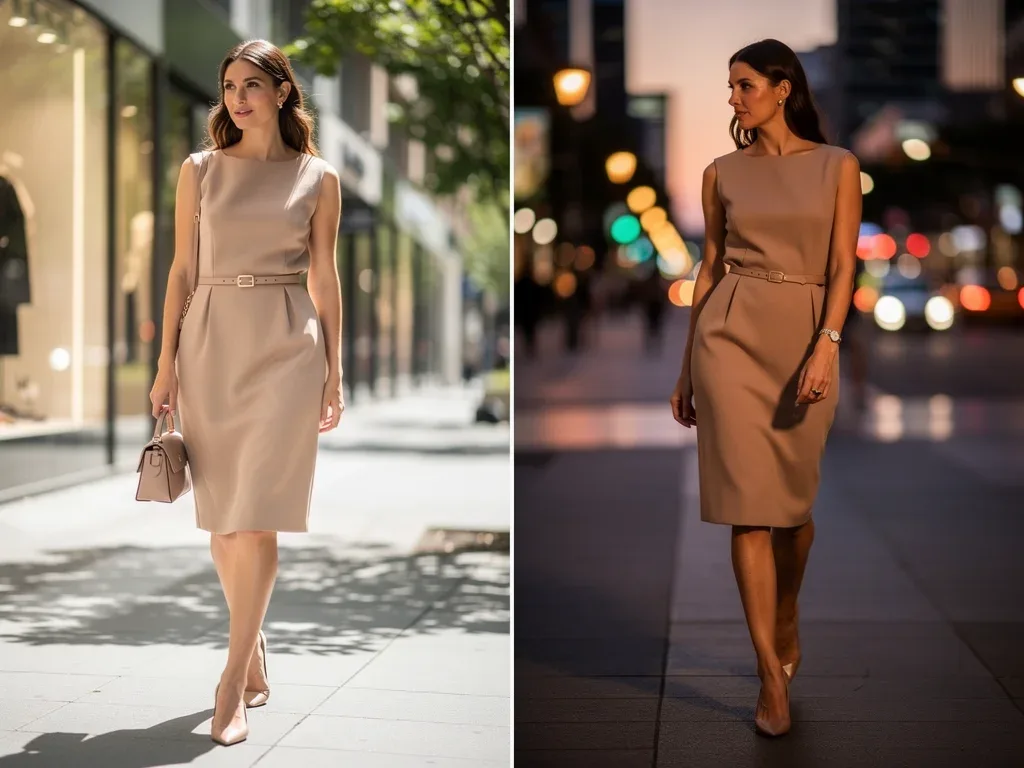
A shift dress typically hangs relatively straight, so adding a belt can significantly change the overall shape without altering the garment.
A slim belt creates subtle definition, while a wider or more decorative option can become a visible focal point.
This makes belts especially useful when the wearer wants the evening version to feel structurally different from the daytime outfit.
Match the Belt to the Dress Proportions
The width and placement of a belt should work with the dress length, fabric weight, and natural proportions of the wearer.
A heavily structured belt can overwhelm very lightweight fabric, while a delicate belt may disappear against a more substantial dress.
Testing the accessory in advance helps ensure that the finished silhouette feels intentional rather than forced.
Outerwear Can Support the Transition
Outerwear can change the character of a shift dress quickly, although it functions more like a layering piece than a traditional accessory.
A blazer can reinforce daytime structure, while a softer or more decorative evening layer can create a different visual direction.
This works particularly well in cooler weather when an additional layer is already necessary for practical reasons.
Keep Layers Easy to Remove
A daytime blazer should be easy to remove without leaving the dress underneath looking incomplete or overly dependent on the layer.
The evening styling should also work independently in case the event takes place indoors and outerwear is removed immediately.
This keeps the day-to-night shift dress itself at the center of the outfit rather than relying entirely on additional garments.
Make the Transition Efficient
A successful day-to-night outfit should take only a few minutes to adjust and should not require access to a full wardrobe.
Preparing accessories in advance eliminates the need to make styling decisions quickly after a long workday or during travel.
The simpler the process becomes, the more likely the strategy will actually be useful in everyday life.
Pack the Evening Accessories Together
Store the two evening pieces in a small pouch or compartment so they remain protected and easy to locate.
This is especially useful for jewelry, which can become tangled or damaged when left loose inside a larger handbag.
Keeping everything together also turns the transition into a routine rather than an improvised styling decision.
Plan the Look Before Leaving Home
Trying the daytime and evening versions beforehand helps confirm that both combinations work with the same dress and base layers.
This also prevents discovering later that a belt changes the dress awkwardly or that certain jewelry competes with the neckline.
A quick trial removes uncertainty and makes the final transformation faster when the schedule becomes busy.
Using a Shift Dress in a Smaller Wardrobe
Versatile garments can support a smaller wardrobe because one item can serve several situations instead of having only one purpose.
A shift dress that works for daytime, dinner, travel, and social events can reduce the need for multiple highly specific outfits.
This approach aligns naturally with a more deliberate sustainable wardrobe built around repeated use and versatility.
Build Around Pieces You Already Wear
A versatile wardrobe works best when it reflects real habits rather than an idealized list of supposedly essential pieces.
If shift dresses already suit your lifestyle, building several accessory combinations around one reliable dress can increase its usefulness.
If the silhouette is rarely worn, another versatile garment may provide more value than buying one solely for this strategy.
Use the Dress as a Capsule-Wardrobe Anchor
A neutral shift dress can work as one component of a transitional capsule wardrobe when it coordinates with several existing layers and accessories.
The same dress can be repeated with different shoes, belts, bags, jackets, and jewelry without requiring completely separate outfits.
This makes wardrobe planning simpler while still allowing enough variation to avoid making every combination feel repetitive.
Choose a dress that works with several existing accessories.
Prioritize fabrics suitable for more than one setting.
Use accessories already present in the wardrobe first.
Repeat the dress with different styling combinations.
Versatility Does Not Automatically Mean Sustainability
Wearing the same garment frequently can improve its usefulness, but sustainability depends on more than simply owning fewer clothes.
Production methods, materials, durability, care, repair, and how long the garment stays in use also influence environmental impact.
The practical advantage of versatile styling is that it can encourage more repeated wear from clothing already owned.
Focus on Cost Per Wear
A garment used frequently across several situations can provide more value than an inexpensive piece worn only once or twice.
Cost per wear is a simple way to think about utility, although it does not measure every environmental or social factor.
The principle still encourages shoppers to consider long-term usefulness instead of judging clothing only by its purchase price.
Creating Confidence Through Preparation
Feeling appropriately dressed can reduce uncertainty when a schedule includes multiple environments with different expectations during the same day.
A planned transition removes the need to improvise an entire outfit shortly before a dinner, meeting, or social event.
This convenience can make personal style feel easier to manage without implying that clothing alone determines confidence or well-being.
Prepared Styling Reduces Decision-Making
Choosing the two accessories in advance reduces the number of small decisions required when moving between daytime and evening activities.
This can be especially helpful during travel, workdays, conferences, or schedules where returning home before an event is unrealistic.
A simple system keeps the focus on practicality while still allowing the wearer to feel intentional about the final look.
Key Element | How It Helps |
|---|---|
Shift Dress | Provides a simple base that works with multiple accessories. |
Statement Jewelry | Creates an immediate evening focal point with minimal effort. |
Belt or Clutch | Changes either the silhouette or the formality of the outfit. |
Advance Planning | Makes the transition quicker and easier during a busy day. |
Wardrobe Versatility | Encourages repeated use of one garment across different settings. |
Frequently Asked Questions About Day-to-Night Shift Dress Styling
Why is a shift dress useful for day-to-night styling?
Its simple silhouette works as a flexible base that can appear more casual or formal depending on accessories, footwear, and layering.
Which two accessories create the biggest transformation?
Statement jewelry paired with a clutch or belt usually creates a strong visual change without requiring a complete outfit replacement.
Do I need to change shoes for an evening look?
No. Shoes can create a strong transformation, but jewelry, belts, bags, and other accessories can also shift the dress effectively.
Which shift dress colors are most versatile?
Neutral colors such as black, navy, charcoal, cream, and beige generally coordinate easily with a wide range of accessories.
Can a bright shift dress still work for day-to-night styling?
Yes. Keep the accessory palette controlled and choose pieces that support the dress rather than competing with its stronger color.
Does versatile styling automatically make a wardrobe sustainable?
No, but wearing garments more frequently and keeping them longer can support a more deliberate approach to clothing consumption.
Conclusion
A day-to-night shift dress does not require a complete wardrobe change when two accessories can create enough contrast between settings.
Jewelry, belts, bags, or footwear can adjust the silhouette and formality while preserving the simplicity that makes the dress versatile.
With a little preparation, one reliable garment can support a busy schedule while keeping everyday styling practical, polished, and adaptable.